Lesson 3: Prompts or How to Communicate with AI
Today we will dive into an interesting and important process — creating prompts. What exactly is a prompt? How do you write one correctly? And what is prompt engineering? Let's figure it out together.
What is a prompt?
A prompt in the context of working with neural networks is an introductory phrase or instruction that you provide to the model to start a dialogue or perform a task. The prompt plays a key role because it sets the context and determines the direction of all subsequent interaction.
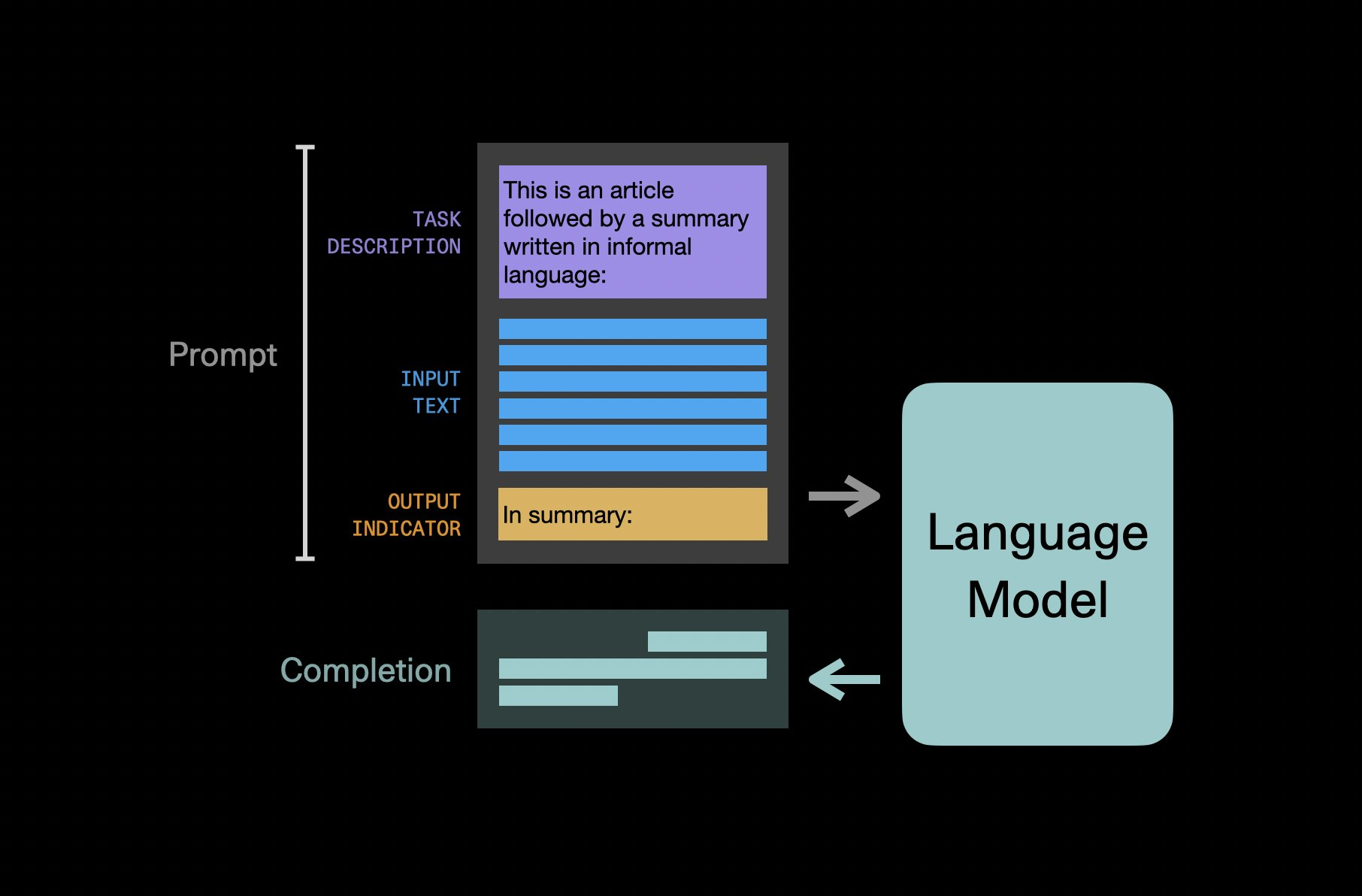
You can think of the neural network as a train driver, and the prompt as the station where the journey begins. You specify the starting point, and your subsequent requests are the waypoints the driver must follow.
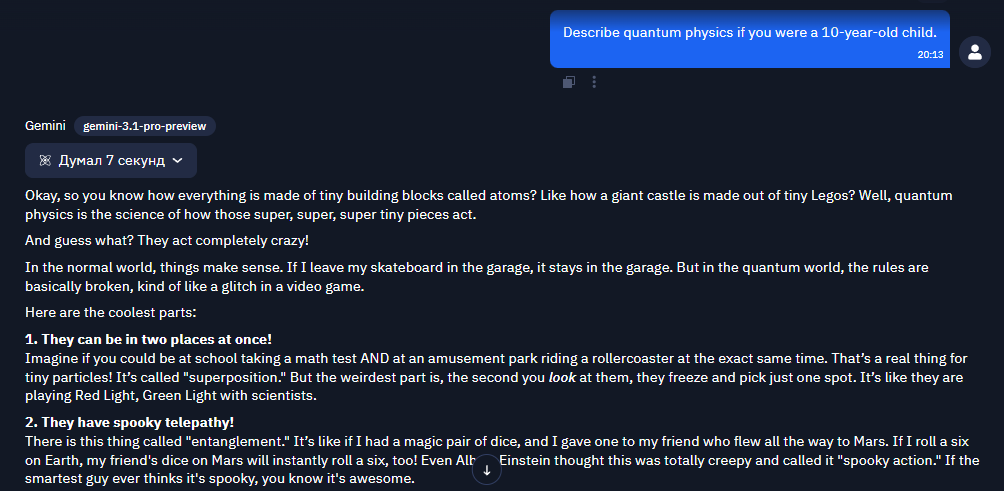
Prompts can be very diverse. It can be a simple question, for example: "What is quantum physics?". Or a more complex structure that sets a specific response style: "Describe quantum physics as if you were a children's book author." In the second case, the model will try to simplify concepts and use a more playful and casual language in its answers.
However, it is worth remembering that although the prompt is the starting point, the neural network evaluates the entire previous context of the dialogue when generating answers. It is important to keep this in mind when planning your subsequent requests.
How to write prompts?
Using prompts is both an art and a science that requires some practice. Understanding the structure of a prompt and its core elements plays a key role. They can be represented as a simple formula that is easy to remember and apply:
Prompt = Role + Topic + Format + Constraints
Let's break down each element in more detail.
-
Role. Determine who the AI should act as. For example, it can pretend to be a lawyer, analyst, copywriter, teacher, or fitness trainer. The role sets the tone, level of expertise, and communication style.
-
Topic. Determine what your prompt should be about. This helps narrow the focus and makes the task clearer for the AI.
-
Format. Decide how you want to receive the answer. This could be a dialogue, story, review, list, table, step-by-step guide, and so on.
-
Constraints. Define the boundaries that need to be considered when creating the prompt: text length, difficulty level, writing style, presence or absence of specific terminology, budget, deadlines.
Besides knowing the structure, the following recommendations will help make your prompts more effective.
Be specific. The more precise and specific your instruction, the more accurate and specific the model's response will be. If you ask it to "tell a story," it can go in any direction. But if you ask it to "tell a story about a young pirate searching for lost treasure in the South Seas," you are much more likely to get an interesting and captivating tale.
Use information-rich prompts. This is especially useful when you want a deep and detailed answer. For example, instead of asking "What is quantum physics?", you could ask: "What are the main principles of quantum mechanics, and how do they differ from classical physics?"
Become an explorer. Don't be afraid to try different phrasings and approaches. This will help you better understand how the model reacts to various instructions and allow you to hone your skills in creating effective prompts.
Remember that it is important to be patient and prepared for the fact that not every prompt will work perfectly the first time. It is a process of exploration and learning, and the more you practice, the better you become.
Common mistakes when writing prompts
Even experienced users sometimes make mistakes. Here are the four most common mistakes to avoid.
Overly broad requests. "Write something interesting" or "Tell me about business" — such prompts leave the model with too much freedom, and the result will almost certainly not be what you expected. Always add specifics: topic, format, target audience.
Lack of format. You ask the model to provide information but don't specify in what form. In response, you might get a solid wall of text, a table, or a list — if the format is not specified, the model guesses. Specify the format explicitly: "present as a table," "write a five-point list," "format as a business letter."
Contradictions within a single prompt. When mutually exclusive requirements clash in one request, the model gets confused. For example: "Write the most detailed report possible, but keep it to two sentences." This is a contradiction: a detailed report cannot consist of two sentences. The model will try to "please" you and produce a compromised but unsatisfactory result. Always check your prompt for internal logic.
Overloading with instructions. Trying to anticipate everything at once turns the prompt into a multi-story structure with a dozen conditions. The model may lose focus and ignore some of the requirements. If the task is complex, break it down into several sequential prompts — the result will be of higher quality.
Remember that it is important to be patient and prepared for the fact that not every prompt will work perfectly the first time. It is a process of exploration and learning, and the more you practice, the better you become.
Prompt engineering
Prompt engineering is the process of optimizing requests to maximize the quality and accuracy of AI responses. Instead of just asking questions and hoping for the best, prompt engineering requires careful thought and a creative approach to formulating tasks.
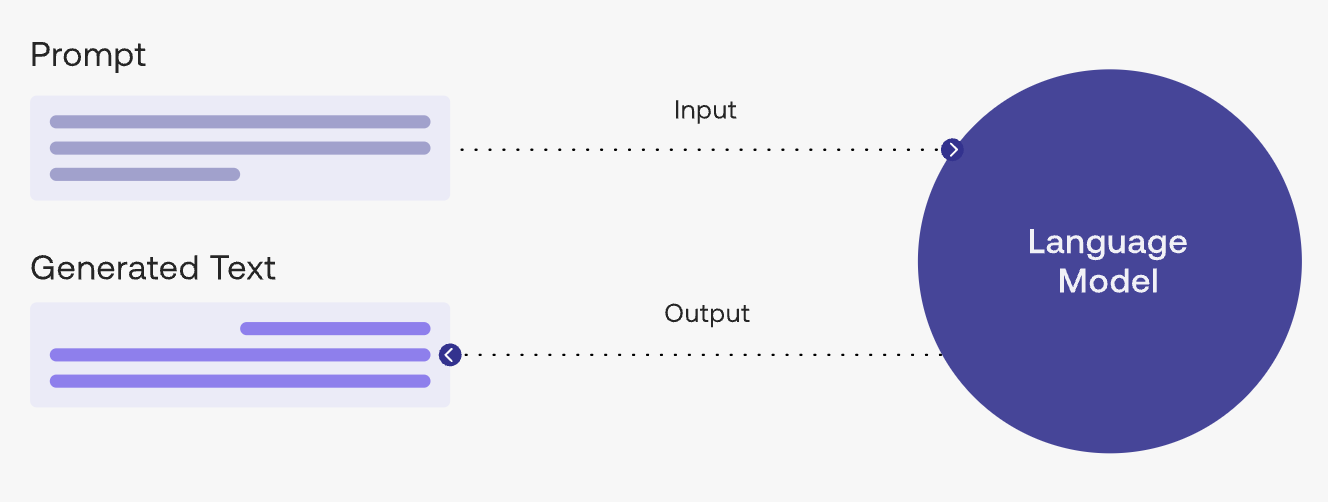
For example, if you simply ask the neural network to "write a story," the result can be completely random and unpredictable because the AI won't understand the context or the expected parameters of the request. However, if you use prompt engineering and formulate the request like this: "Write a one-page story about a sea captain facing the curse of the ancient seas, in the format of a children's fairy tale, and make sure the ending is happy." The result will be specific and meet your expectations.
Prompt engineering involves not only formulating prompts but also applying various techniques, such as decision trees or prompt chaining. We will cover these techniques in more detail in a separate lesson.
Creating your first prompt
Now let's look at a real example to see how the process of writing a prompt works.
Situation. You work as a marketer for a company that sells home goods on Wildberries. You have been tasked with running an advertising campaign to increase demand for a product.
Idea. You want to save time on researching the market situation.
Analysis. We identify the company's niche — home goods; the sales platform — marketplaces; the target audience — women aged 30–40.
Determine the format. A research report that highlights the key market trends for 2026 point by point, followed by a conclusion on how this can be applied to our company.
Set the role. Experienced marketer.
Putting the prompt together
"Act as an experienced marketer who needs to conduct research on the state of the marketplace market for 2026. You will need to highlight the key trends point by point, and at the end, write a conclusion on how this data can be applied to a company that sells home goods, with a target audience of women aged 30–40."
We send this prompt to the neural network and receive a detailed response with analytics.

Testing and refinement. If necessary, we adjust the prompt to get the best result. For example, you can specify: "Add a forecast on the growth of competition in the home goods niche to the research" or "Focus on seasonal trends." The neural network will rebuild the response taking the new inputs into account.
What to do with contradictory instructions?
Neural networks, like any other AI models, can encounter situations where they are given contradictory instructions. These can be requests that directly contradict each other, or requests leading to incompatible goals. In these cases, the model will try to find the most reasonable solution based on what it knows and how it was trained.
However, as a user, it is important for you to understand how to properly handle such contradictions.
Check your instructions. Before sending a request, make sure it is clear and does not contradict itself. For example, if you ask to write "a story about a knight who has never been in a battle but won a war," this introduces confusion. Try rephrasing the request to eliminate contradictions.
Remember that the neural network is trying to please you. Models are trained to draw conclusions and make assumptions based on the provided information and strive to give the most useful and relevant response. If your instructions are contradictory, the model may try to please you, which can lead to unexpected and undesirable results.
Use contradictions creatively. Contradictory instructions are not always a mistake. They can be a powerful creative tool. Try intentionally clashing opposite characteristics in one request: "Describe a character who looks threatening but evokes sympathy" or "Write a text that sounds like a business letter but reads like a thrilling novel." Such prompts force the model to look for unconventional solutions and often lead to the most interesting and lively results. The main thing is to use this technique consciously and understand what effect you are trying to achieve.
In this lesson, we learned what prompts are, what they consist of, analyzed common mistakes, and learned how to apply prompt engineering using a real case study. Now try it yourself!