Lesson 5: Content Generation with ChatGPT
Welcome to the fourth lesson of our course! In this lesson, we will look at how you can make money on websites using ChatGPT. We will figure out how to use AI for content generation, discuss potential monetization methods, and, of course, share practical examples and tips.
Content Generation with ChatGPT
In the field of content generation, ChatGPT opens up revolutionary possibilities for us. This technology can generate original content on any topic, characterized by high quality and uniqueness. This becomes extremely useful when creating content for websites.
- Saving time and resources
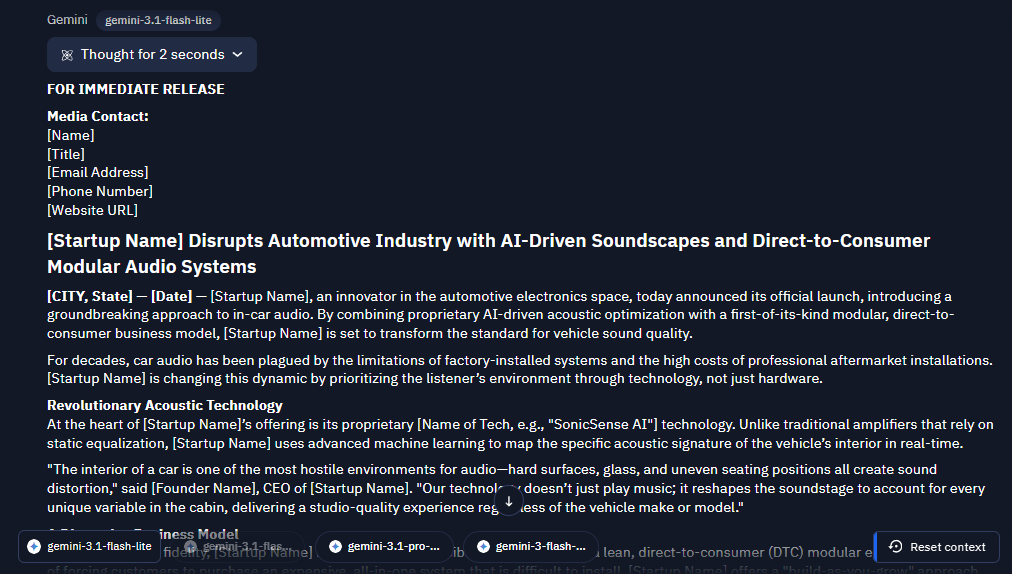
Imagine, for example, that you work in a blockchain startup and you need a press release to announce the launch of a new product. Instead of spending hours drafting and editing text, you can simply ask ChatGPT: "Write a press release for a car audio startup, highlighting our unique technology and business model." And just like that, ChatGPT will generate a text that details your startup, your new technology, and how it will transform the market:
- Flexibility and adaptability of ChatGPT
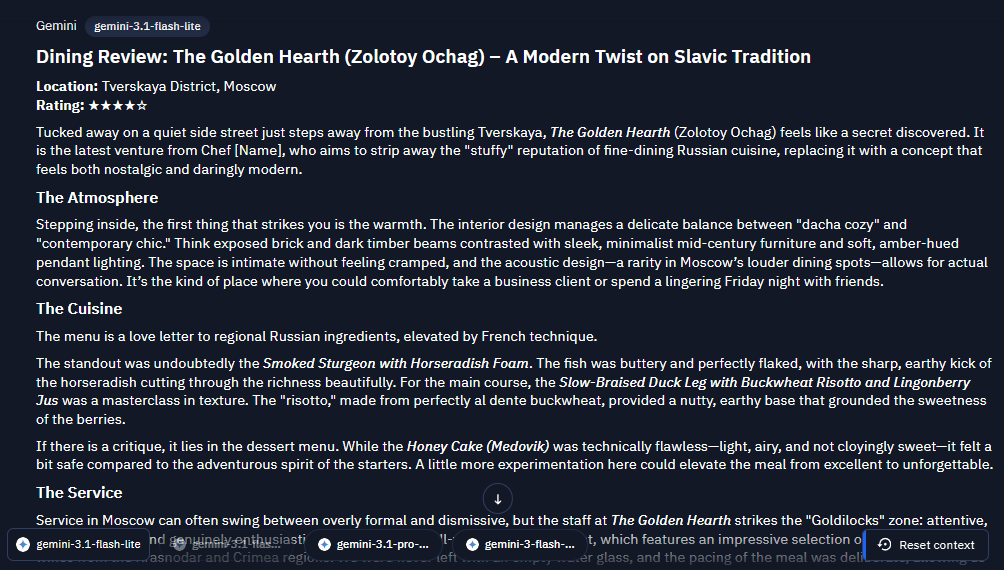
This applies to various topics and writing styles. Perhaps you need a review of a trendy new restaurant in your city? "Write a review of a new restaurant in Moscow, evaluating the atmosphere, cuisine, and service." ChatGPT carefully listens to your instructions and creates a detailed review that reflects all your requirements:
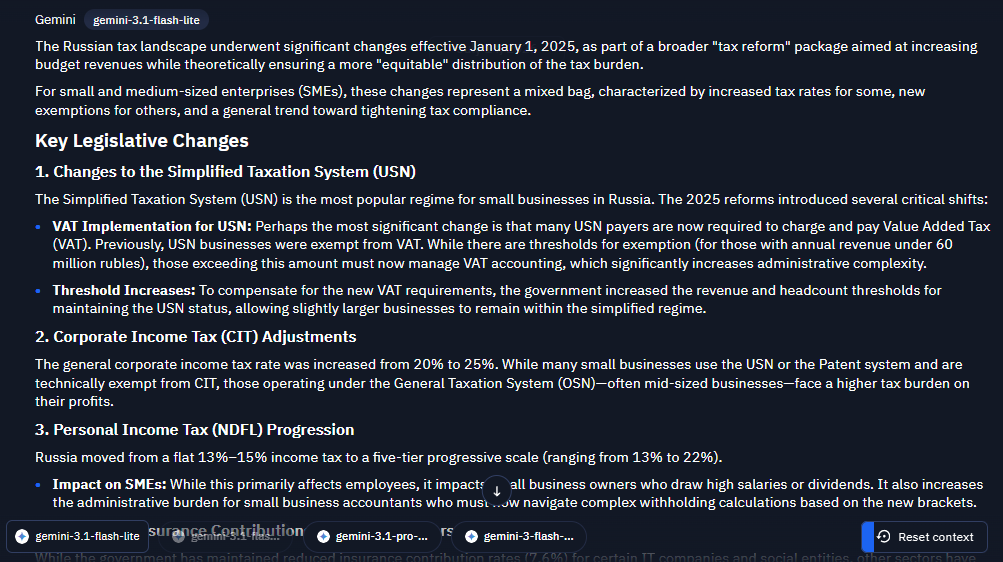
It is especially worth noting that to work effectively with ChatGPT, you need to know how to formulate prompts correctly. The more precise and specific your prompt, the more accurate and useful the response you will get. Perhaps you want to write an in-depth article about recent changes in tax legislation: "Tell me about the changes in Russian tax legislation, evaluating their impact on small businesses." As a result, you will get an informative article that breaks down every detail of the changes and their consequences for small businesses.
Website Creation and Development
Now that we have a powerful tool for generating high-quality content, let's talk about the actual process of creating and developing a website. What is important to consider, and how can ChatGPT be used in this context?
First of all, you will need a foundation for the website, meaning a domain and hosting. These are basic things that you probably already know. However, it's worth remembering that the choice of domain can play a key role in your SEO. The domain should be easy to remember, match your topic, and, if possible, contain keywords. As for hosting, choose a reliable provider that can ensure fast page load times and good support.
- Website design
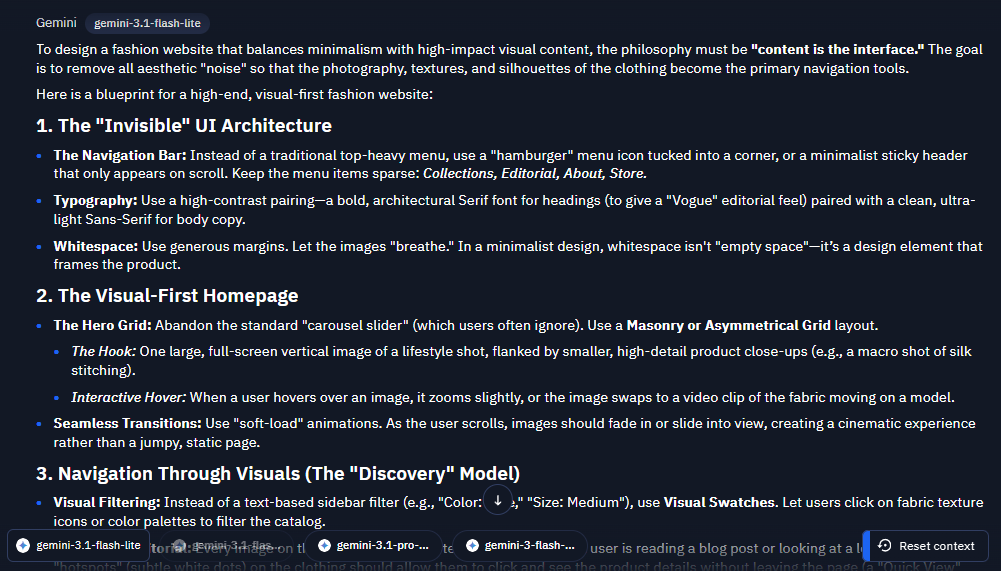
The design of your website also plays an important role. The user interface should be simple, intuitive, and pleasing to the eye. For example, you can turn to ChatGPT: "Describe a fashion website design that combines minimalism and easy navigation, with an emphasis on visual content." ChatGPT can offer you a design concept that combines these elements, which you can then present to your web designer:
- Content and population
As for website development, its main engine is, of course, content. A website without regular content updates loses its relevance and drops in search engine rankings. Here, ChatGPT can become your indispensable assistant, providing a continuous stream of unique and interesting content that will attract and retain the audience's attention.
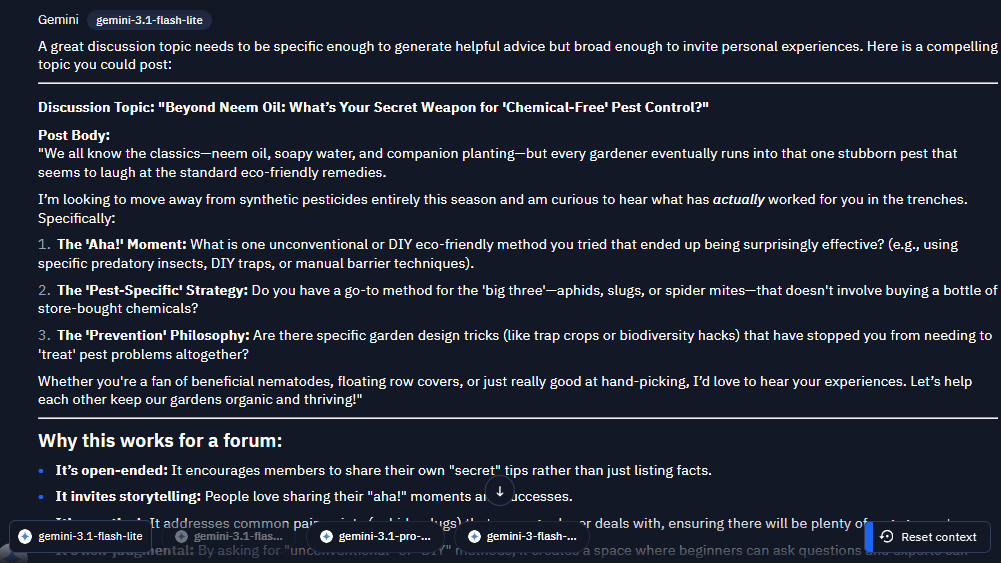
Social interaction also plays a big role in the development of your website. Consider including a blog or forum on your site to ensure constant interaction with your visitors. Here, ChatGPT can be used to create discussion starters or to reply to your visitors' comments. For example, you can ask: "Come up with a discussion topic for a gardening forum related to eco-friendly pest control methods."
In general, creating and developing a website is an ongoing process that requires attention to detail and regular input. But with the right tools, like ChatGPT, it can become not only a profitable but also an exciting endeavor.
Website Monetization
Once the basics of website creation and development have been mastered and applied, it will be time to discuss a crucial topic: website monetization. What are the ways to turn traffic and content into income? And how can ChatGPT help in this process?
One of the most common ways to monetize a website is contextual advertising, such as Google AdSense or Yandex.Direct. These are advertising systems that allow you to place ads on your website and earn money for clicks or impressions. The amount of income depends on many factors, including the website's topic, the quantity and quality of traffic, the location of visitors, and others. It is important to remember that for successful monetization in this way, the website must be useful and interesting to visitors. This is exactly where ChatGPT comes into play, as it can create high-quality content capable of attracting and retaining an audience.
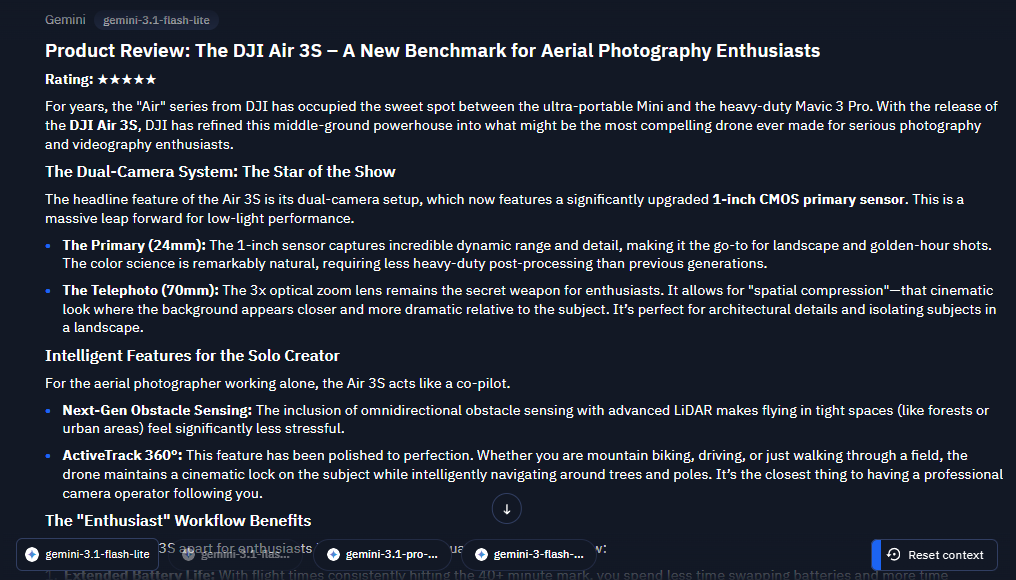
In addition to contextual advertising, there are other monetization methods. One of them is selling affiliate products or services. If your website is dedicated to a specific topic, you can partner with companies that offer related products or services and receive a commission for each sale or lead. In this case, you can use ChatGPT to create product or service reviews, for example: "Write a review of the new DJI drone model, focusing on its features and benefits for aerial photography enthusiasts"
Another interesting option is creating paid content. If your website provides unique and valuable information, you can set up a paid subscription for access to specific content. Here, ChatGPT can help create this valuable content, for example, by generating detailed guides or analytical reports.
Creating Niche Websites
Once you understand the basics of website creation, development, and monetization, you can move on to the next stage: creating highly specialized (niche) websites. This approach can give you a competitive advantage in the market and help attract a specific target audience.
A highly specialized website, also known as a niche website, focuses on a specific topic or market segment. For example, instead of creating a website about cars in general, you could create a site dedicated solely to Tesla electric cars or classic American muscle cars. This approach allows you to become an authority in your niche and attract a target audience looking for specialized information.
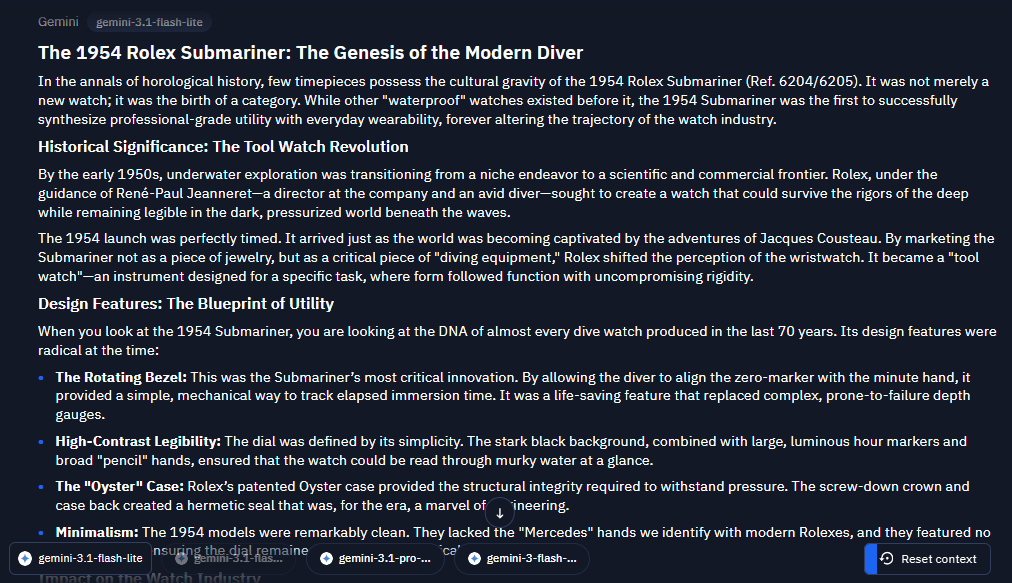
Creating content for such websites can be a challenging task, as it requires deep knowledge in a specific area. However, ChatGPT can significantly simplify this task. Let's say you want to create a website about vintage Rolex watches. Instead of spending a lot of time researching and writing articles, you can ask ChatGPT: "Write a detailed piece about the 1954 Rolex Submariner model, discussing its historical significance, design features, and impact on the watch industry."
This approach allows you to generate unique and high-quality content that will attract and retain the audience on your website.
Monetizing Niche Websites
Creating niche websites can also be more profitable from a monetization perspective. The target audience of such sites is often more interested in purchasing products or services related to their interests, which can increase the effectiveness of your advertising and affiliate programs. Moreover, if your website becomes an authoritative source of information in its niche, it can open up additional monetization opportunities for you, such as selling consultations, books, video courses, etc.
Overall, creating niche websites is a strategy that requires careful planning and execution, but with the right approach, it can yield significant results. And with the help of ChatGPT, this process can become much easier and more effective.
Continuous Content Work
Creating high-quality content is just the first step in managing a website. To stay relevant and attract new visitors, you need to regularly update and add new content to your site. This is an important aspect of website management that requires continuous work and constant attention.
The website's content must be fresh and up-to-date to attract and retain visitors' attention. For example, if your website is dedicated to technology, you will have to regularly update information about new products, trends, and events in the industry. The more often you update your site, the more content will be available for indexing by search engines, which will help improve your SEO ranking.
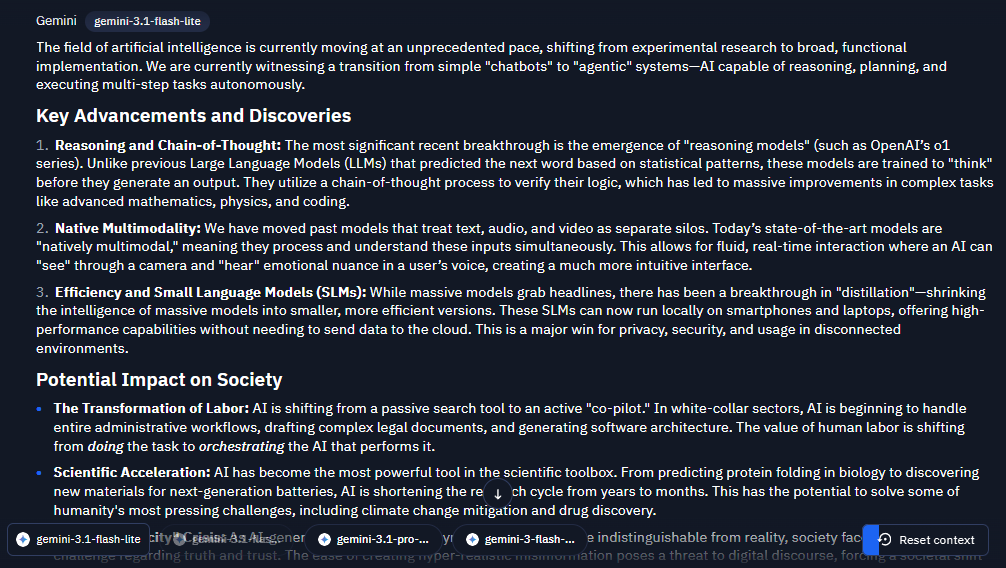
However, creating new content can be a time-consuming process. This is exactly where ChatGPT comes to the rescue. Imagine you need to update your tech blog with new articles about the latest advancements in artificial intelligence. Instead of writing each article yourself, you can simply ask ChatGPT: "Write an overview of the latest advancements in artificial intelligence, discussing key discoveries, their potential impact on society, and upcoming trends." This will help you create new, fresh, and relevant content without spending a lot of time and resources.
Maintaining Relevance
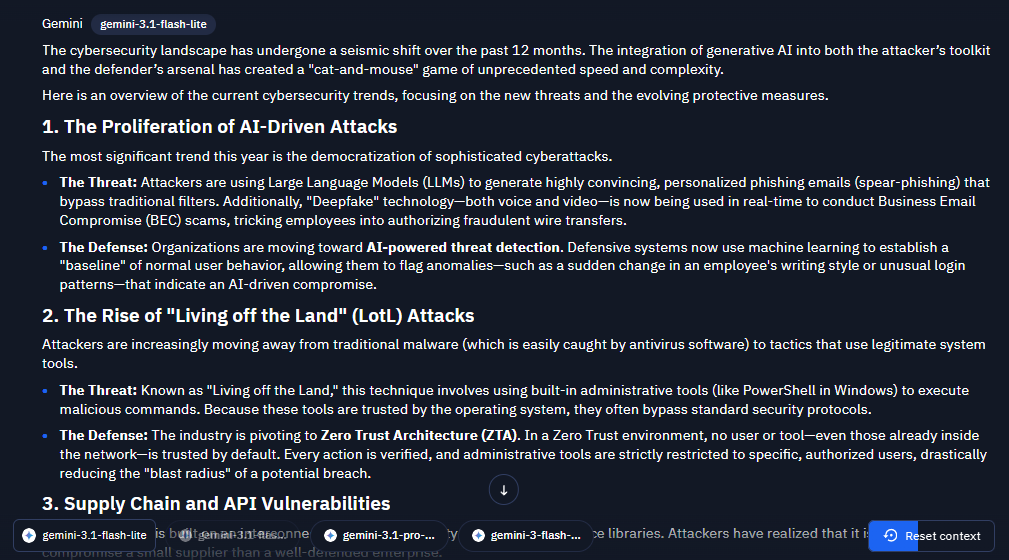
It is important to remember that continuous content work involves not only creating new content but also updating the old. Information you published a year or two ago may become outdated. Check your content for relevance and update it if necessary. ChatGPT can help here too: "Update the article on the latest cybersecurity trends, taking into account new threats and protective measures that have emerged over the past year."
Overall, continuous content work is a key element of any website's success. With the help of ChatGPT, this process can become much easier and more effective.
And now let's try to create some content ourselves!
Practical Assignment
Task:
Create a content outline for a fictional travel blog.
Instructions:
- Choose a unique niche for your travel blog. This could be a specific geographic region, a certain type of travel (e.g., ecotourism), or a unique perspective (e.g., traveling by scooter).
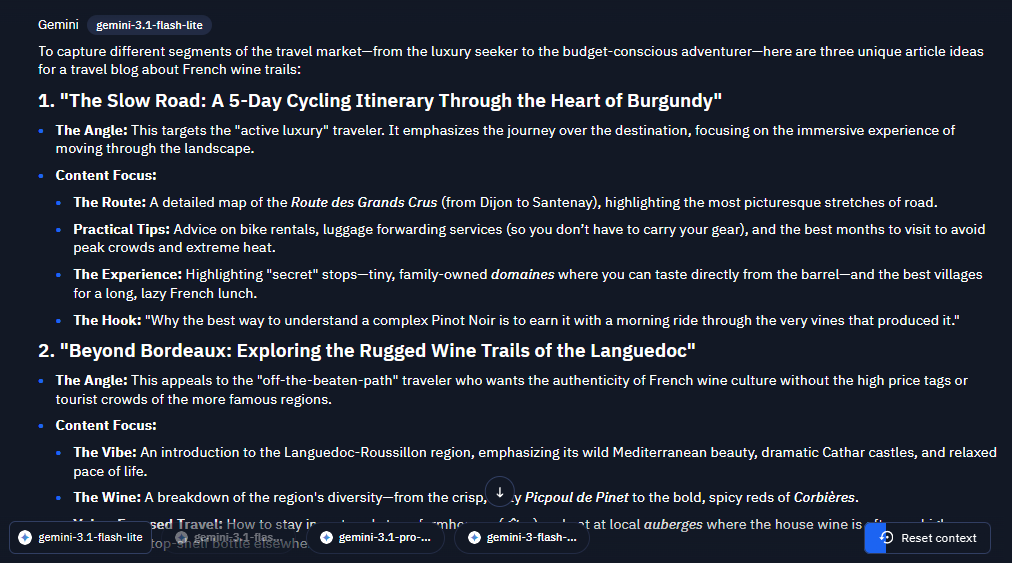
- Generate ideas for three articles for this blog using ChatGPT. Make sure each idea is unique and interesting to your target audience.
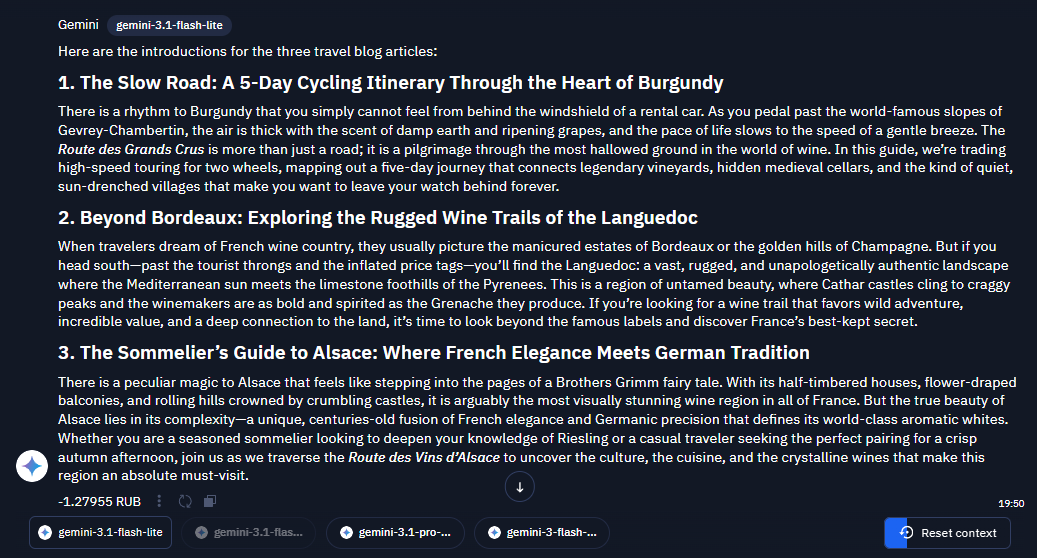
- Using ChatGPT, write an introduction for each of these articles. It should be engaging and give the reader an idea of what to expect from the article.
Example:
- Niche: Traveling along the wine trails of France.
- Article ideas:
Prompt for ChatGPT: "Come up with 3 article ideas for a travel blog about the wine trails of France"
- Introductions to the articles:
Prompt for ChatGPT: "Write an introduction for each of these articles"