Lesson 5: Creating a Study Plan
In this lesson, using a real case study of an engineering student, we will look at how to effectively create a study plan using Claude to make sure you get everything done before finals.
Preparing for finals is a challenge where the volume of material is huge and deadlines are tight. Creating a study plan helps organize your time, set priorities, and reduce stress. Claude 3.7 Sonnet, thanks to its analytical capabilities, is the perfect tool for this task. It can structure your schedule, suggest learning methods, and adapt the plan to your goals and capabilities.
Let's break down the details of the case: a sophomore majoring in Information Technology is preparing for the summer finals, which start in 4 weeks. He has three exams:
- Math (linear algebra and calculus, intermediate level).
- Physics (mechanics and thermodynamics, below average level).
- Programming (Python, algorithms, above average level).
He also needs to finish a programming term paper. The student has 3–4 hours a day to study (weekday evenings, 6–8 hours on weekends). He prefers practical assignments and visual methods (diagrams, videos).
Task: Create a study plan using Claude so the student can prepare for exams and finish the term paper without burning out.
Analyzing Priorities and Weaknesses
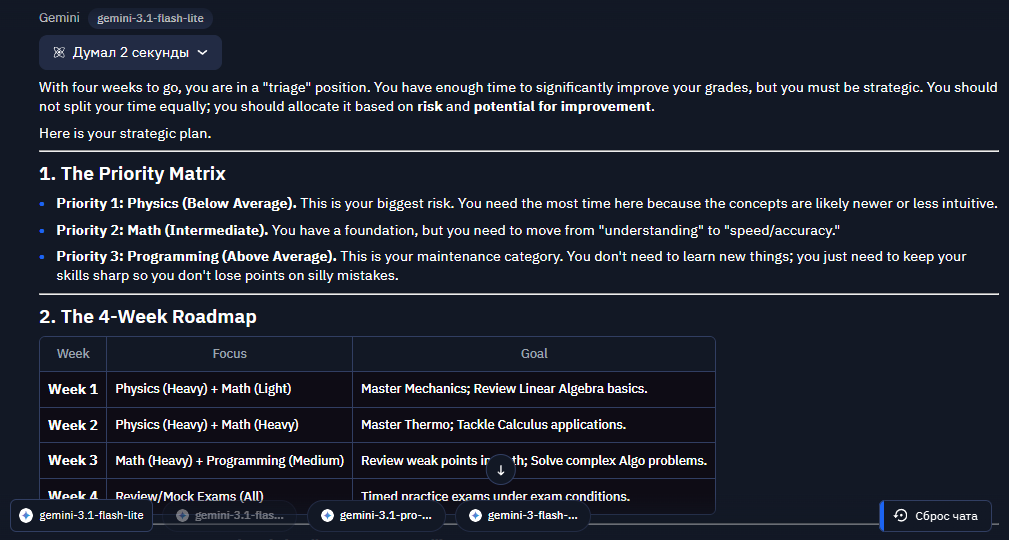
Claude can evaluate which subjects or topics require more time and attention based on your knowledge level, the complexity of the material, and the urgency of the tasks. This helps you focus on the most problematic areas without wasting time on topics you've already mastered.
Example "I have 4 weeks until finals, exams in math (linear algebra and calculus, intermediate level), physics (mechanics and thermodynamics, below average level) and programming (Python, algorithms, above average level). Which subject should I study first, and what are the most important topics?"
Creating a Detailed Schedule
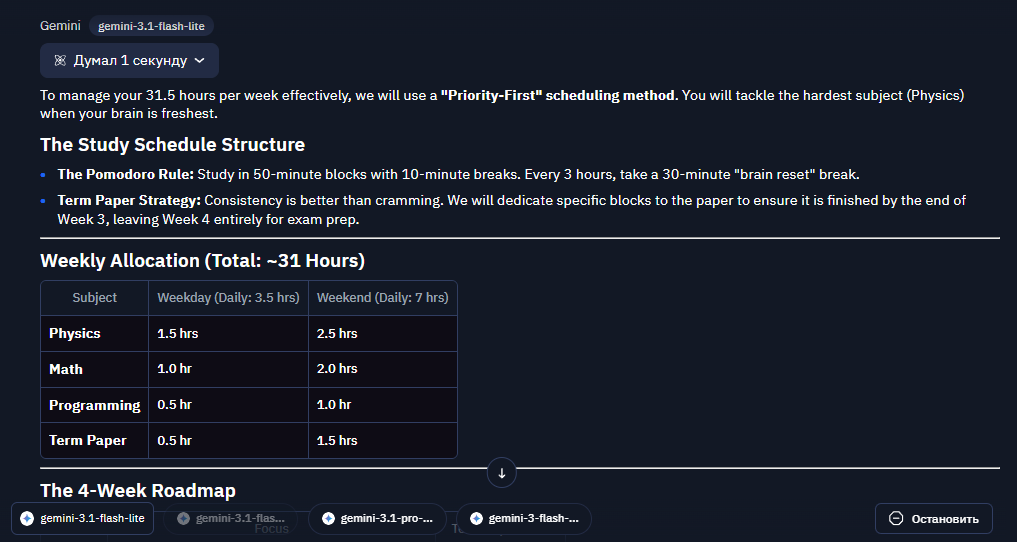
After setting priorities and selecting key topics, the next important step is to plan your time wisely. Claude will help break down the preparation into weeks and days, taking into account available time, breaks, and the balance between subjects. This helps avoid burnout and maintain a steady study pace.
"Create a 4-week study plan based on the priorities and key topics. I have 3–4 hours on weekdays, 6–8 on weekends. Include breaks and time for the term paper."
Recommendations for Study Methods
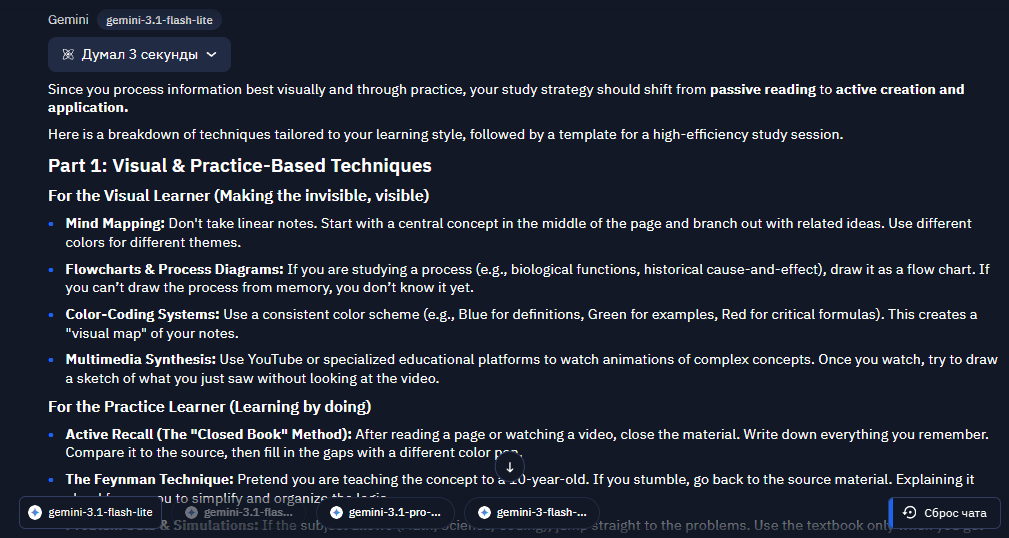
Claude can suggest personalized learning techniques tailored to your memorization style (in our case, visual). These can be diagrams, video lessons, practical exercises, or mnemonic devices that enhance retention.
"Suggest methods for effectively studying the topics if I process information best visually or through practice. Adjust the schedule by dividing the time according to these methods."
Preparing for Exam Questions and the Term Paper
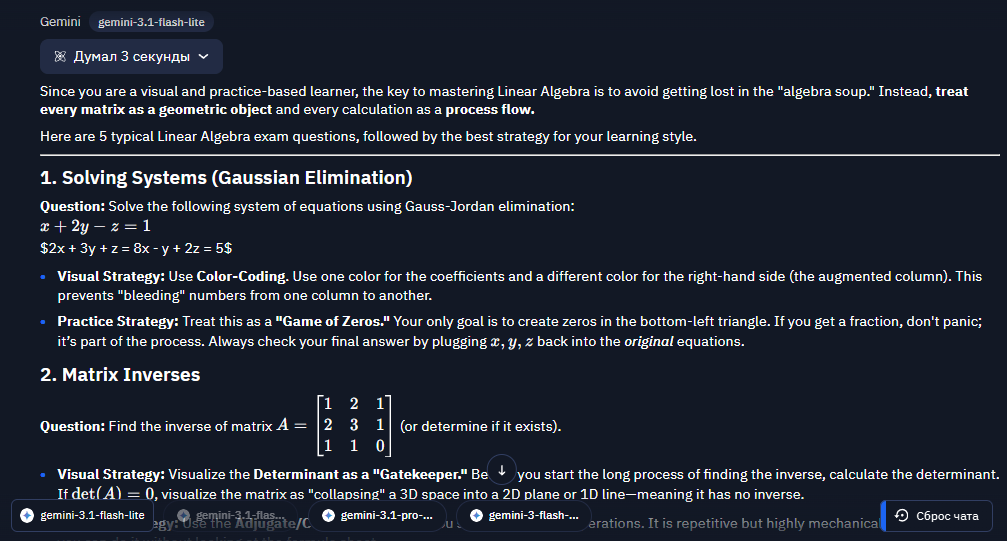
During the learning process, it's important not to forget about preparing directly for exam questions and how to answer them properly. Claude will help generate typical exam questions for practice, explain complex topics in simple terms, and suggest step-by-step plans for finalizing your term paper. This will help not only reinforce the material but also prepare you for the exam format.
"Create 5 typical linear algebra exam questions and suggest the best way to answer them."
Tracking Progress and Adjusting the Plan
Claude will help track how far you've progressed in your preparation, identify weak spots, and make changes to the plan if you're falling behind or, conversely, ahead of schedule. This ensures flexibility and adaptability in the learning process.
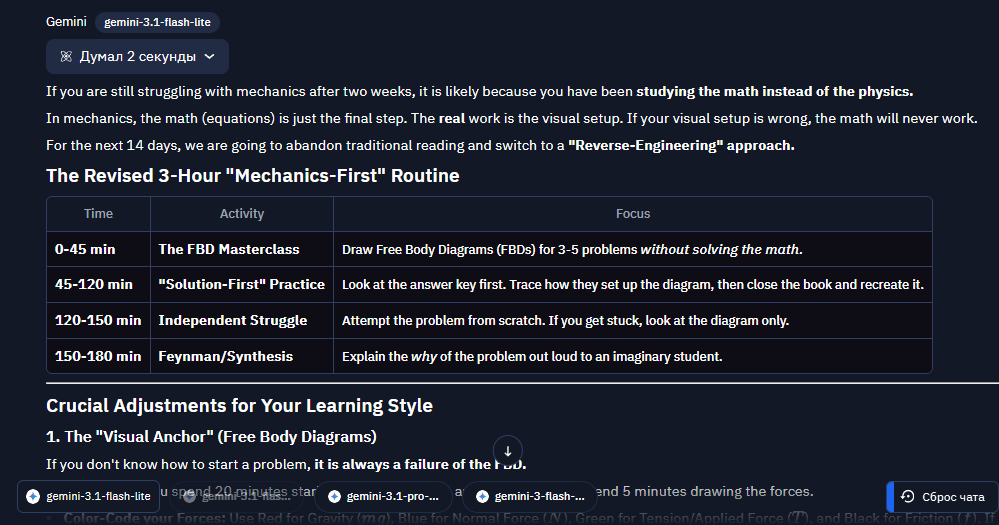
"I followed the physics study plan for 2 weeks, but I still don't understand mechanics well. How should I adjust the plan for the remaining 2 weeks if I have 3 hours a day?"
Summary
The student received a balanced plan where physics takes up 40% of the time due to his weak level, math and programming take 25% each, and the term paper takes 10%. The plan takes into account his visual learning style (diagrams, videos), includes practical exercises, and schedules breaks to avoid burnout. Claude also suggested self-assessment questions for each subject and broke down the term paper revisions into stages, making the process manageable.