Lesson 2: Creating Academic Texts
Welcome to the second lesson of our module dedicated to using neural networks in the educational process. Today, we will focus on one of the most important parts of the learning process: creating academic texts. We will explore how Claude can facilitate this complex process, from formulating a powerful thesis statement to working with citations and bibliographies. Remember that neural networks are a tool to help make your academic papers more structured, clear, and persuasive, but they cannot completely write the paper for you.
Academic Writing and Claude: Getting Started
Academic writing differs from other forms of writing in its structure, objectivity, and use of formal language. It requires deep research, clear argumentation, and strict adherence to academic standards. All these elements can be challenging, but Claude can make this task significantly easier.
Here are some key steps where it can help:
- Planning and formulating a thesis statement:
Your thesis statement is the foundation of your academic paper. It defines the purpose and direction of your entire research. Claude can help you formulate a clear and precise thesis statement; simply ask it to generate a few options based on your preliminary idea or concept.
Example:
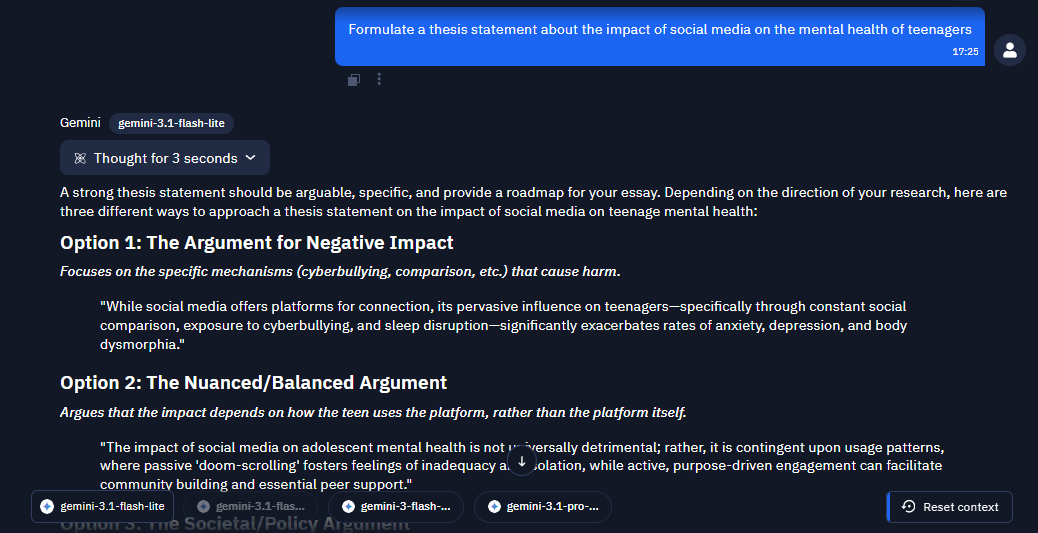
Suppose your preliminary idea is related to studying the impact of social media on teenagers' mental health. You can generate a thesis statement using the following prompt:
"Formulate a thesis statement about the impact of social media on the mental health of teenagers."
Answer:
- Writing an initial outline and creating a structure:
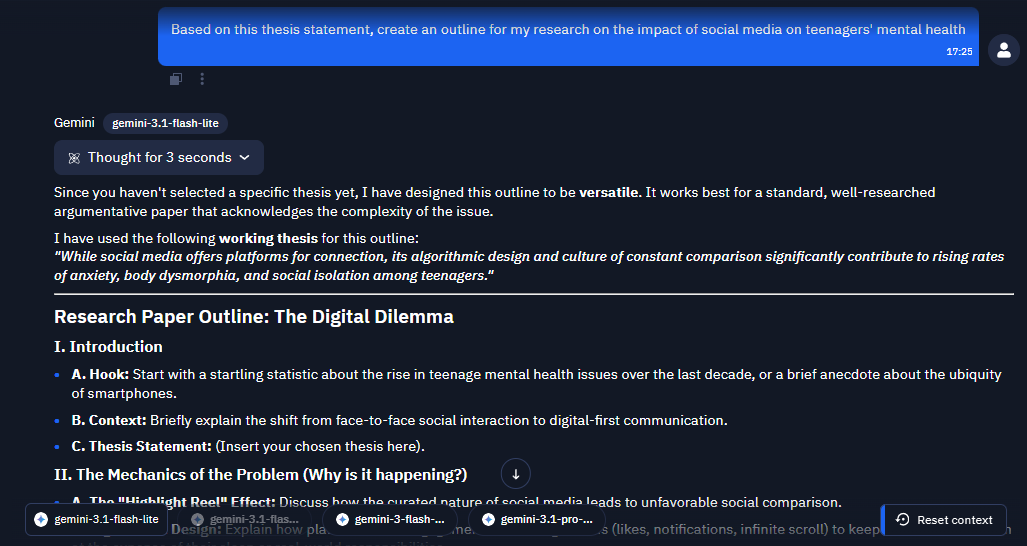
After formulating the thesis statement, the next step is usually creating the structure of your paper. Claude can help you with this by suggesting a suitable structure based on your thesis. You can also ask it to generate subheadings or key points that should be covered in each section.
Example:
"Based on this thesis statement, create an outline for my research on the impact of social media on teenagers' mental health."
Answer:
- Researching and writing the main text:
When writing the main text, it is important to ensure that you support your thesis with arguments based on reliable information. Claude can help you find relevant sources or suggest ideas on how to develop your argument.
Example:
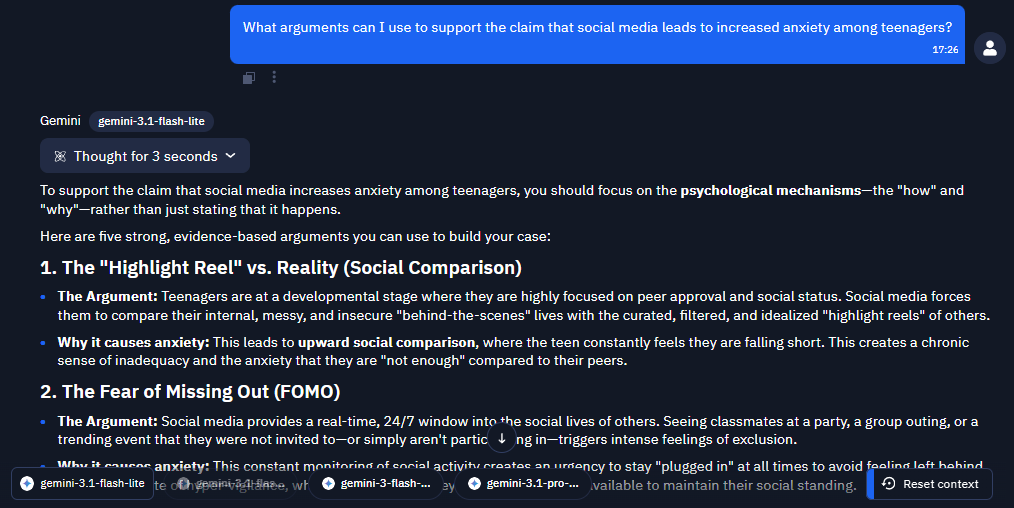
Let's say you need to argue why social media can lead to increased anxiety among teenagers. You can ask the neural network to suggest some ideas:
"What arguments can I use to support the claim that social media leads to increased anxiety among teenagers?"
Answer:
- Editing and paraphrasing:
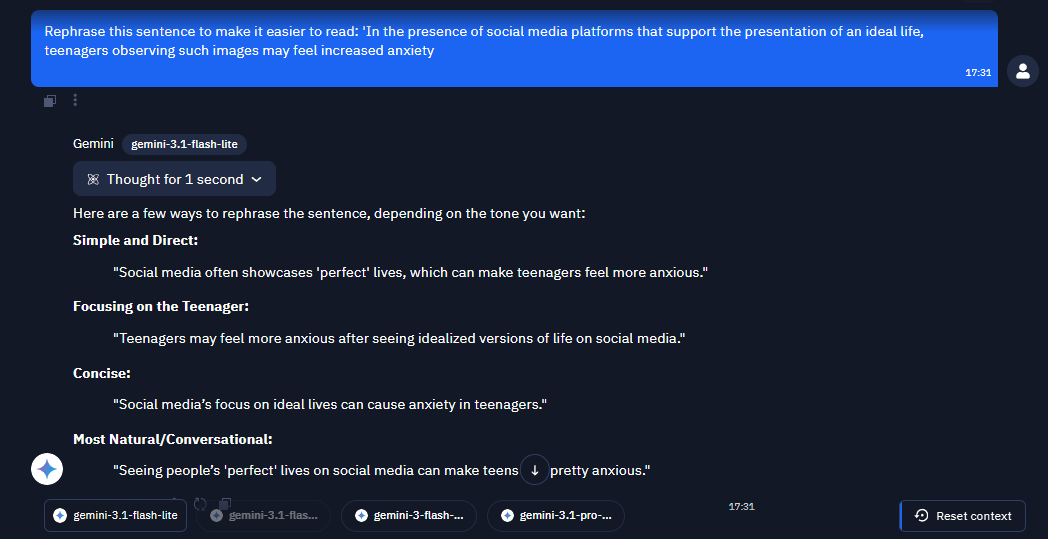
After completing the main text, it is important to thoroughly edit and paraphrase to ensure your text is clear, coherent, and meets academic standards. Claude can help you with this by suggesting different phrasing options or improving the grammar and style of your text, as well as increasing originality, which is useful for plagiarism checks.
Example:
"Rephrase this sentence to make it easier to read: 'In the presence of social media platforms that support the presentation of an ideal life, teenagers observing such images may feel increased anxiety.'"
Answer:
- Formatting citations and bibliographies:
Proper formatting of citations and bibliographies is a critical part of academic writing. Neural networks can help you with this by following academic standards such as APA, MLA, or Chicago style.
Example:
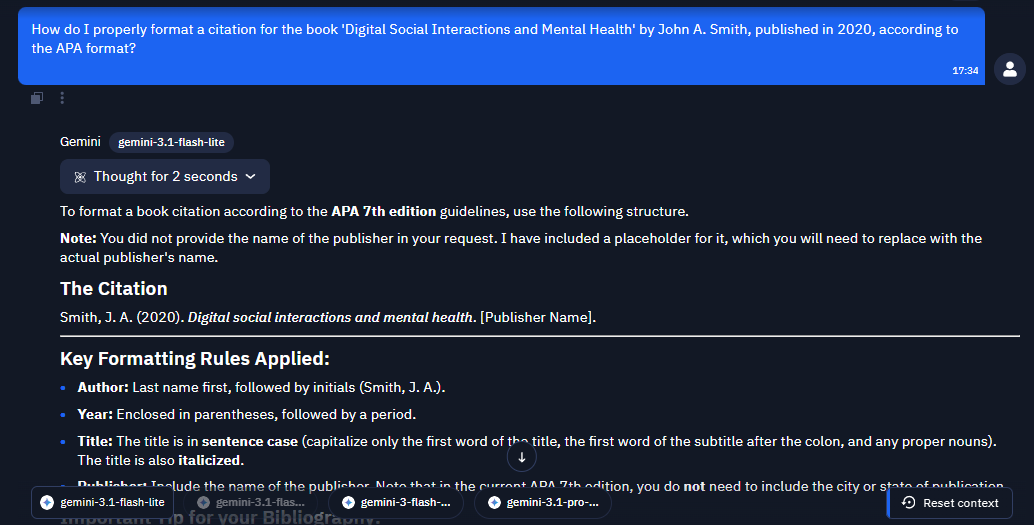
Suppose you need to cite a book in your research project according to the APA format:
"How do I properly format a citation for the book 'Digital Social Interactions and Mental Health' by John A. Smith, published in 2020, according to the APA format?"
Answer:
Creating academic texts is an art that requires structure, logic, and attention to detail, but with Claude's help, it can become significantly easier and more efficient. Remember that it is still important to conduct your own research and critically evaluate the information you receive. Claude is a great assistant, but the final word is always yours.