Lesson 4: Neural Networks for Email Marketing
Welcome to the fourth lesson of our module dedicated to using Grok in marketing. Today, we will move on to one of the most important and effective areas of marketing: email marketing. In this lesson, we will explore how neural networks can help you create personalized emails that can increase the overall effectiveness of your email marketing strategy.
Introduction to Email Marketing
Email marketing is a powerful customer engagement channel that allows you to build long-term relationships, drive sales, and increase loyalty. It enables organizations to connect directly with consumers by sending information straight to their inboxes. The importance of email marketing should not be underestimated: research shows that the ROI (return on investment) in email marketing can reach 4,200%, making it one of the most effective marketing tools available.
Email marketing offers a huge range of benefits. It helps to:
- Maintain customer relationships: Email marketing allows you to stay in touch with customers, keeping them informed about new products, promotions, and events.
- Segment your audience for targeted outreach: With email marketing, you can send personalized offers and messages that reflect the interests and behavior of each specific customer.
- Automate communication, saving time and resources: Using automated campaigns, you can send emails at the right time, which increases their effectiveness.
- Track metrics: Using various metrics, such as open rate, CTR (click-through rate), and conversion rate, you can measure the success of your email marketing campaigns and optimize them based on the data you collect.
A good email marketing strategy involves a clear understanding of your company's goals, identifying your target audience, and developing creative and effective content that will interest and engage your subscribers. The following sections of this lesson will help you understand how Grok can assist in achieving these goals.
Creating Personalized Emails
Today, personalization has become a key factor in a successful email strategy. Moreover, according to statistics, personalized emails are opened 29% more often, and the average revenue from them increases by 41%. Personalization can include using the recipient's name in the subject line or email body, taking their preferences or behavior into account when selecting email content, and much more.
Grok can be used for:
- Creating personalized greetings and introductions: For example, "Hi, [Name]! We noticed you liked our latest sneaker models..."
- Adapting email content based on customer interests and preferences: "We have a new collection of pants that we think you'll love, based on your previous choices..."
- Creating personalized offers and promotions: "We know you love our coffee drinks, so we're giving you a 20% discount on your next order!"
- Developing personalized CTAs (calls to action): "You won't want to miss this opportunity, [Name]! Place your order today!"
An example of this kind of prompt could be:
"Write a personalized email for a customer who is interested in athletic shoes and recently viewed the new sneaker collection on our website"
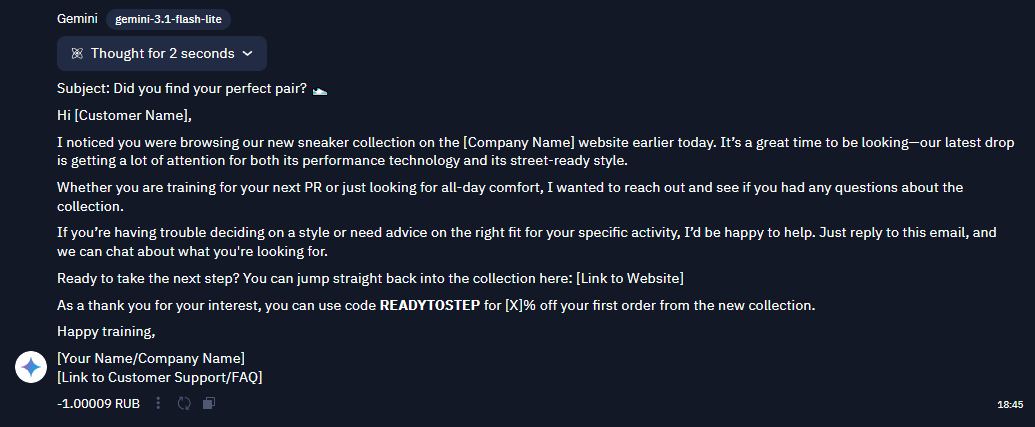
It is important to remember that personalization should be appropriate and balanced. Overdoing personalization can make customers feel uncomfortable.
Content Automation
One of the key challenges for many email marketing teams is creating relevant and engaging content on a regular basis. Automation saves time by allowing you to send emails based on triggers (registration, purchase, abandoned cart). Grok can help you plan scenarios and integrate with suitable platforms:
"Come up with an email sequence for new customers of an athletic shoe store"
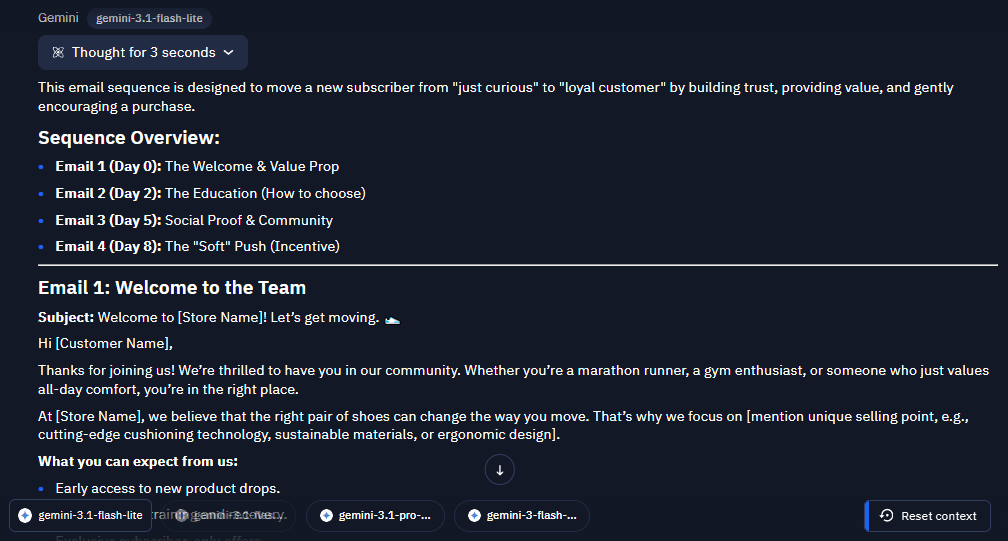
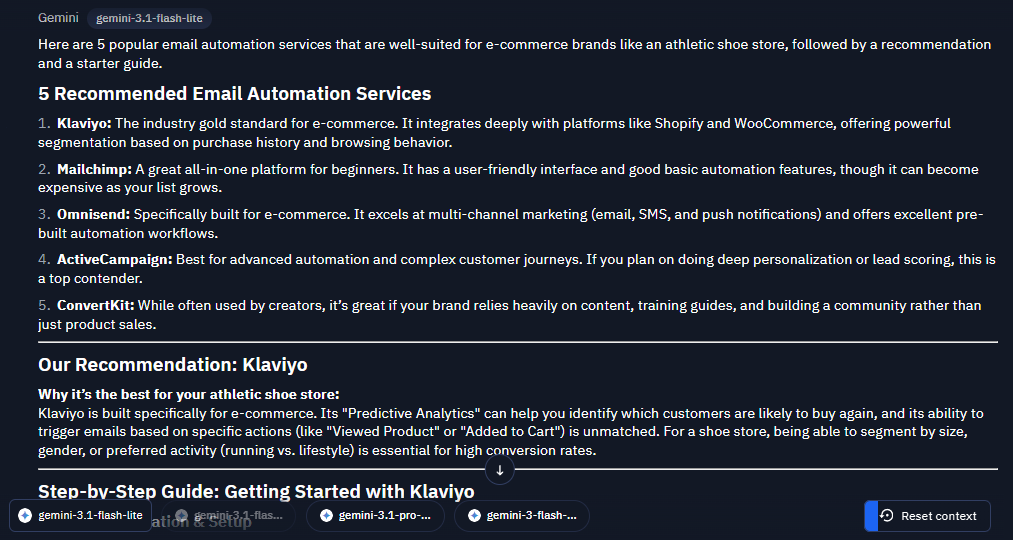
Next, let's try to find out how to automate the mailing process:
"Suggest 5 email automation services, choose the 1 most suitable for our company, and provide a step-by-step guide on how to get started with it"
Improving Open Rates and Click-Through Rates
Open Rate and Click-Through Rate (CTR) are key metrics that determine the success of email campaigns. Well-crafted subject lines, thoughtful preview texts, and creative calls to action (CTAs) directly impact whether a customer will open the email and take the desired action.
- Working with subject lines
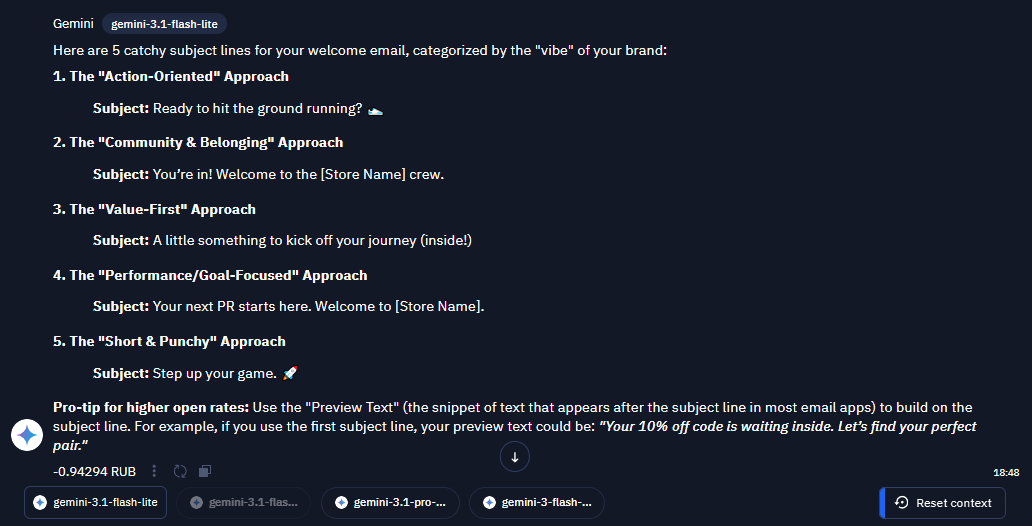
The subject line is the first thing the recipient sees. It should be concise (up to 60 characters), intriguing, and relevant. Grok helps generate subject lines that take audience interests and trends into account:
"Come up with 5 catchy subject lines for a welcome email to a customer of an athletic shoe store"
- Preview texts
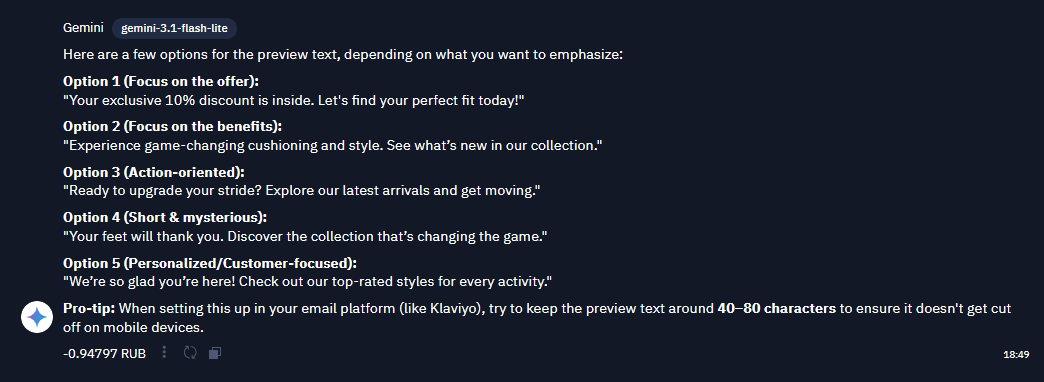
Preview text is a short line (up to 100 characters) that appears next to the subject line in an email client. It complements the subject line, increasing the desire to open the email:
"Write a preview text for an email with the subject line 'Step into a world of comfort with SneakersClub!'"
- Call to action
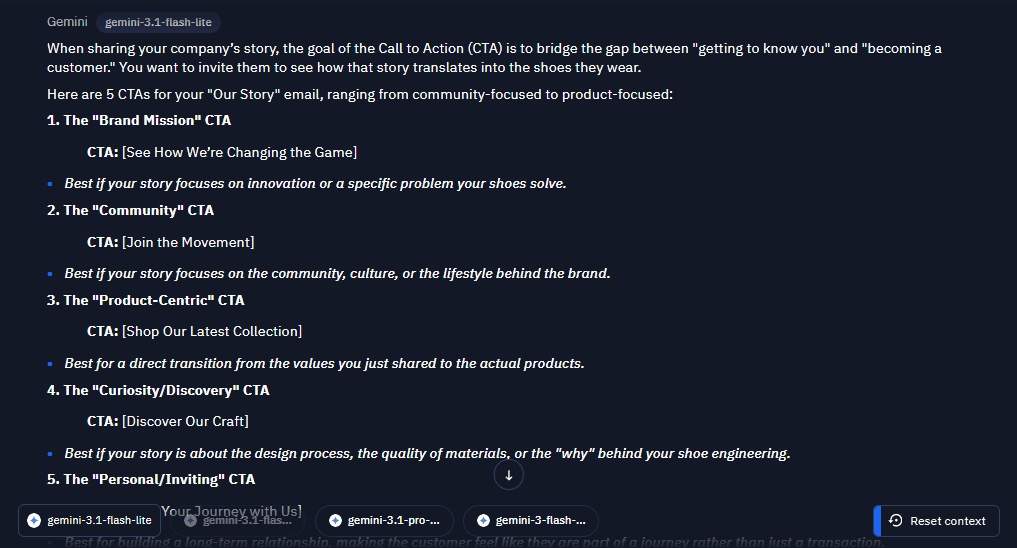
A CTA is a button or text that prompts a click (e.g., "Buy Now", "Learn More"). Creative and clear CTAs increase CTR by 15–20%:
"Come up with 5 CTAs for an email featuring our company's story"
Don't forget to attach the text of the email itself!
A/B Testing
A/B testing is a method of comparing two or more versions of an email (subject lines, texts, visuals, or CTAs) to determine which one delivers better results across metrics like Open Rate and Click-Through Rate (CTR). In 2025, A/B tests have become the standard in email marketing, as they allow you to make data-driven decisions rather than relying on intuition. Thanks to its analytical capabilities and content generation skills, Grok helps create test variations, predict their effectiveness, and analyze results to optimize campaigns and achieve business goals.
How A/B Testing Works
A/B testing involves dividing your audience into equal or proportional groups, each of which receives a different version of the email. For example:
- Variant A: Subject line "20% off cosmetics!" with a green CTA button.
- Variant B: Subject line "[Name], glow with our serum!" with an orange CTA button.
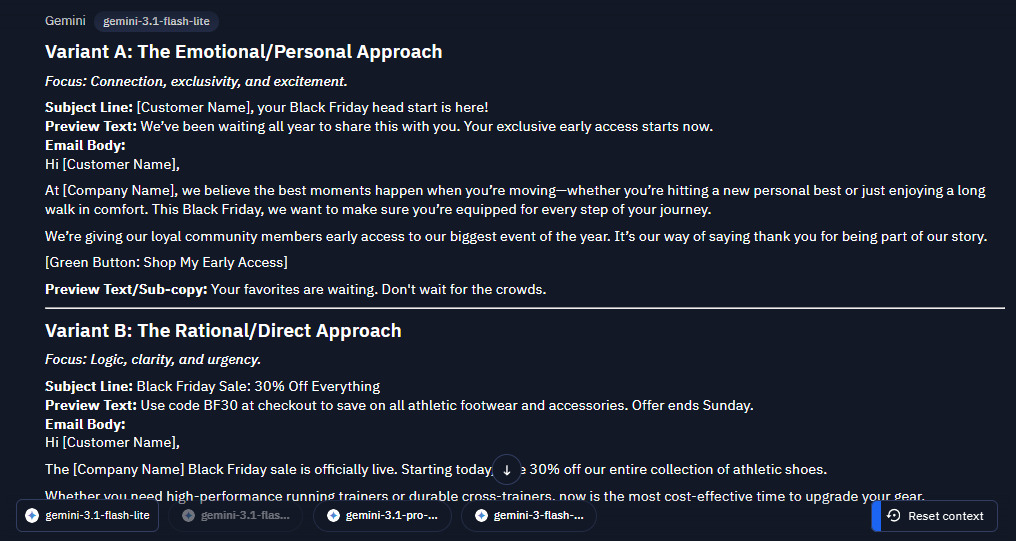
For example, your company has set a goal to increase CTR by 20%, and you decide to test the following hypothesis: an email with a personalized subject line, an emotional preview, and a green CTA button will perform better. Let's try to reflect this in a prompt:
"Write 2 versions of a Black Friday email for A/B testing. Variant A should contain a personalized subject line, an emotional preview, and a green CTA button. Variant B should contain a generic subject line, a rational preview, and an orange CTA button. Also, suggest the best time to send these emails and ideas for visuals"
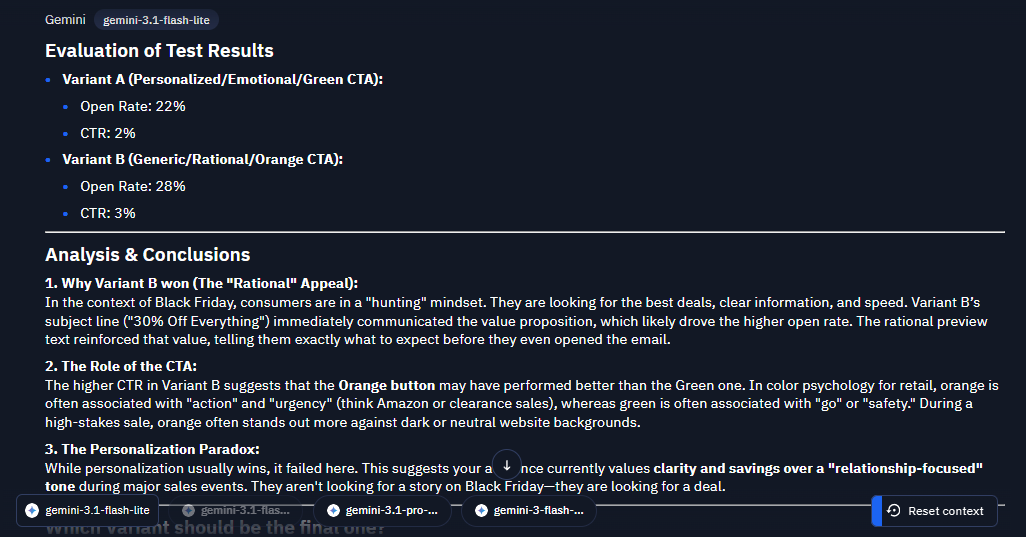
In addition to helping generate email variations, Grok can assist in evaluating the test results:
"Evaluate the test results: Variant A — open rate 22%, CTR 2%; Variant B — open rate 28%, CTR 3%. What conclusions can be drawn from them, and which variant should be the final one? Are further tests required?"
We hope this lesson was useful and helped you better understand how Grok can improve your email marketing strategy. Whether you are trying to optimize the content creation process, improve email personalization, or increase open and click-through rates, neural networks can be a valuable tool in your arsenal.