Lesson 4: Creating Commercial Illustrations for Brands
From social media banners to product packaging, AI helps brands stand out in the market. In this lesson, you will learn how to use Midjourney and Flux to create professional illustrations tailored to a company's corporate identity. We will cover how to analyze client requests, select styles, and refine images for commercial success.
Understanding the Brand's Objective
Commercial illustrations must align with the brand's goals: attract the audience, highlight uniqueness, and fit into the corporate identity. Before starting work, it is important to understand the client's objective and expectations. We can entrust the analysis process to neural networks, for example, by uploading the information provided by the client or by creating a brief ourselves:
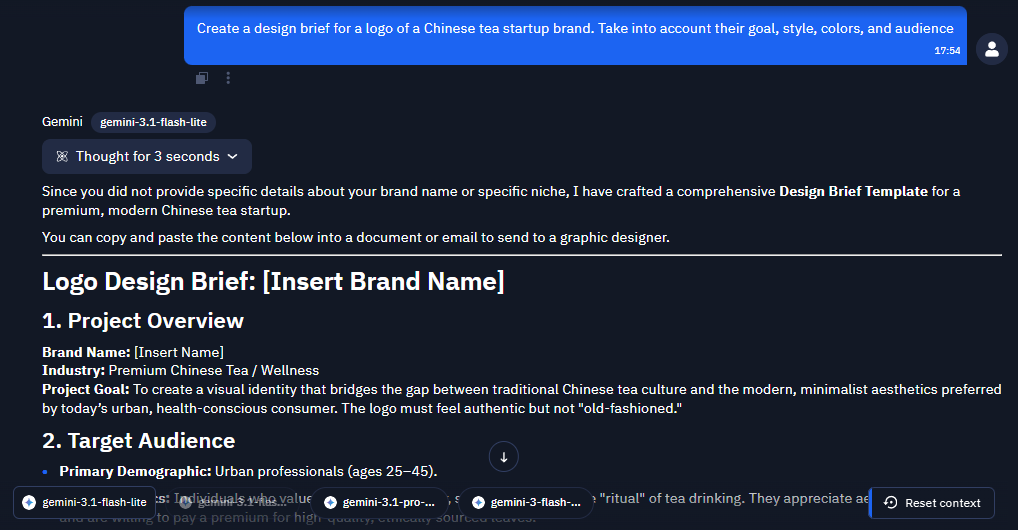
Now, thanks to the brief, we can give the neural networks the most precise instructions on what kind of illustration we want to see.
Creating a Logo
Let's highlight the important points from the brief from an illustration perspective and write a prompt to create a logo: "A logo for a Chinese tea brand. Overall style: Modern, minimalist, with elements of traditional Chinese art. Tone: Cozy, warm, evoking associations with nature and harmony. Elements: You can use stylized images of tea leaves, teacups, or traditional Chinese symbols (e.g., characters, pagodas). Main colors: Green (symbolizes freshness and nature), gold (associated with quality and luxury), red (traditional Chinese color symbolizing luck and happiness). Font: Readable, modern, with the ability to use both Cyrillic and Latin alphabets. You can use fonts with light elements of oriental style. Additional elements: Possible integration of characters to denote specific tea varieties or brand philosophy."
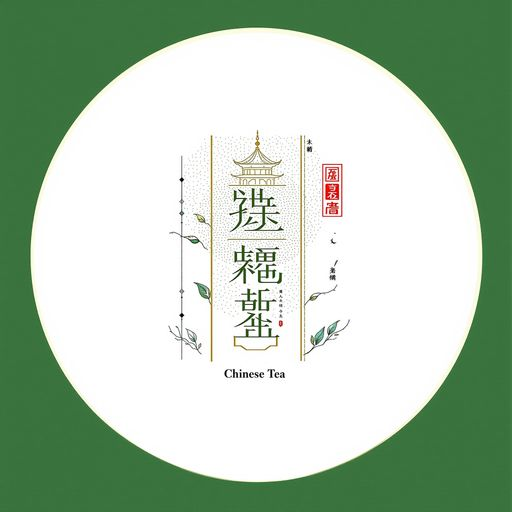
Here is how our logo turned out with Flux:
Result from Flux
And in Midjourney:
Result from Midjourney

As you can see, Flux followed the instructions much better, while Midjourney offered an option that looks more luxurious and minimalist but does not match many details from the prompt. Therefore, it is important to understand the features of each model to be able to choose the right one for your current task.
Do not be afraid to experiment with different versions and model parameters - this is how you will find the perfect result.
Let's turn to ChatGPT for help with refinement by writing the prompt: "Analyze this logo created based on the request: [text]. How can the request be changed to improve the logo?"
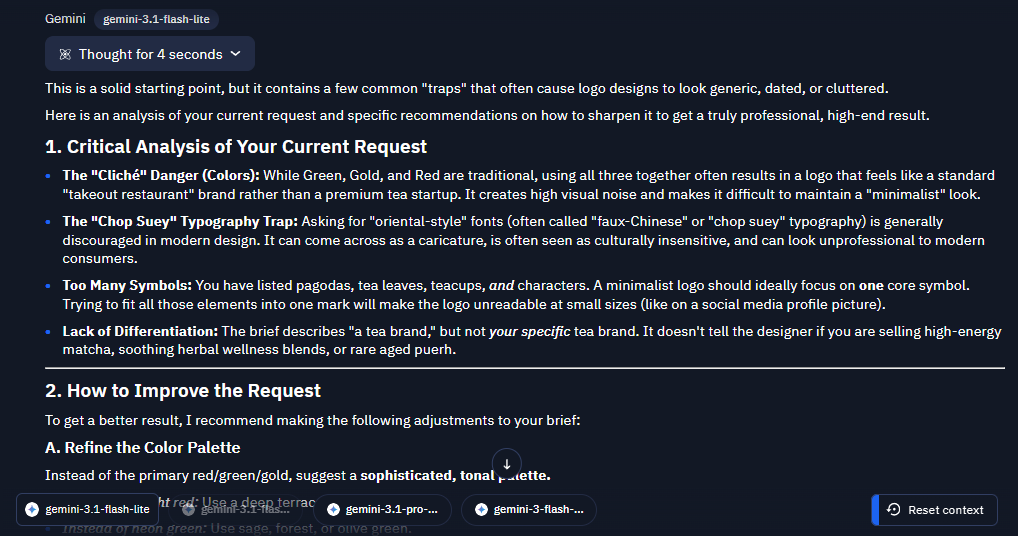
Improved prompt with the help of ChatGPT:
"Create a logo for a Chinese tea brand aimed at a youth audience and traditional tea connoisseurs. Overall style: Modern, minimalist, with elements of traditional Chinese art. The logo should evoke associations with tranquility and harmony. Use stylized images of green tea leaves and the character for "tea" (茶). Main colors: light emerald green, deep gold, and bright red. Font: modern, readable, with light elements of oriental style. The logo should be symmetrical and balanced."
In addition, let's try playing with the model parameters: we will increase "stylize" to 250 for a more artistic logo, and "weird" to 250 as well. Let's see what we got:
Option 1
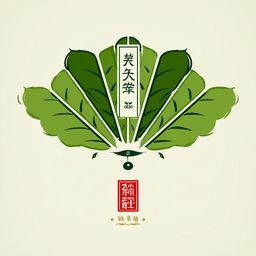
Option 2
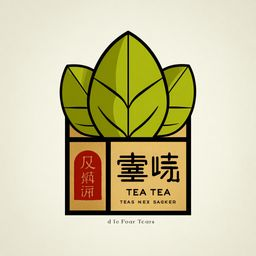
The logo options turned out to be more unusual due to the addition of the "weird" parameter, and more modern thanks to our clarification of the target audience in the prompt.
Applying the Logo
The finished logo is the core of the branding, which can be integrated into other illustrations (banners, packaging, merch). Adapting to the corporate identity makes the visuals cohesive and professional. We suggest trying to design tea packaging based on the logo by writing the prompt:
"Chinese tea packaging in the style of this logo. Material: thick paper/cardboard. Format: small box. The packaging should stand on a dark stone slab with a Chinese ceremonial teapot nearby":
Option 1
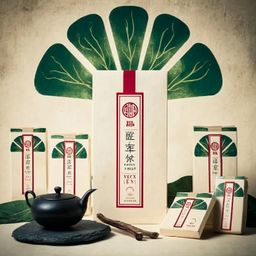
Option 2
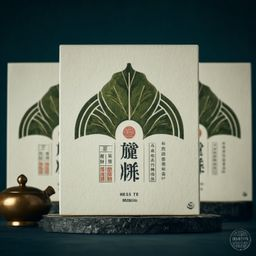
Option 3
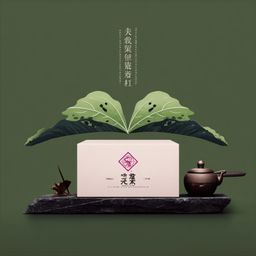
Lastly, let's try generating an Instagram banner using Flux. When generating such illustrations, do not forget to change the aspect ratio in the model parameters; in our case, we will use 2:3.
"Draw an Instagram advertising banner using this tea packaging":
Result from Flux
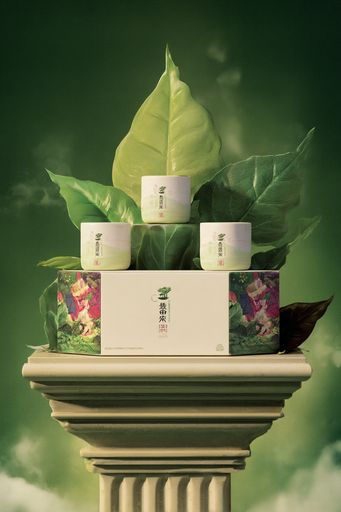
Thus, with the help of neural networks, we can create a complete company brand book while spending a minimal amount of time. Midjourney and Flux allow you to generate logos, banners, packaging, and merch that match the corporate identity and attract the audience.