Lesson 2: Creating Vivid Characters and Captivating Worlds
Welcome to the second lesson of our "for authors" module, where we will explore how ChatGPT can help you create characters and worlds for various audiences. Whether it's children's literature, Young Adult, or adult genres, developing compelling characters and the world they live in is a key element in creating engaging content.
Creating Characters
Characters are one of the most important components of any literary work. They act as the engines of the plot, support themes and ideas, capture readers' attention, and add emotional depth. Creating characters that feel real, complex, and multifaceted requires time, patience, and a lot of hard work.
With ChatGPT, you can develop characters from scratch by asking the model questions about their appearance, personality, background, and motivations. You can use the model to create detailed character descriptions, as well as to explore various aspects of their lives and personalities.
Q&A Sessions for Character Personality Development
One of the most exciting ways to use ChatGPT in the character creation process is by conducting Q&A sessions with your "character." Try to imagine that you are interviewing your character and ask the model questions about their biography, motives, dreams, and fears. You can even try to dive deeper by asking questions about the character's daily life, relationships, or personal views.
For example, you can ask the model: "How would my character describe their best friend?" or "I have a main character in my book, what is my character's biggest fear and why?".
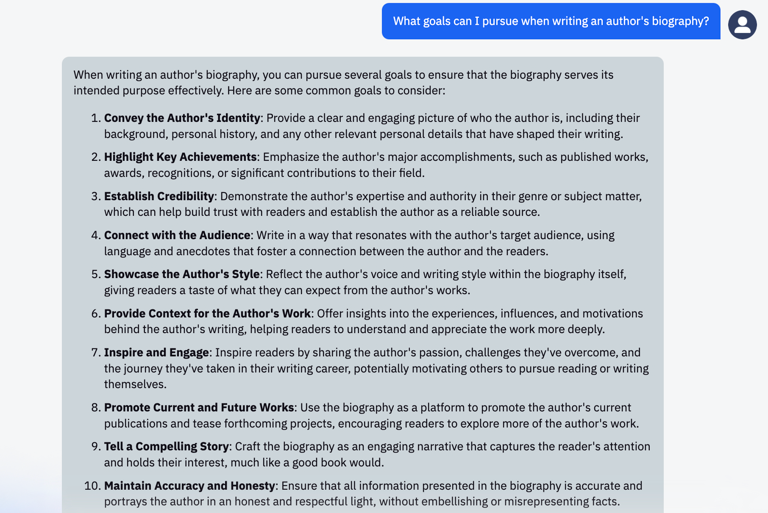
The response might be as follows:
Developing the Background
Use ChatGPT to create a rich and unique backstory for your character. You can ask the model questions about the character's family tree, past relationships, or life experiences, for example: "What could have happened in my character's childhood that shaped their personality?" or "What impact did growing up in a military family have on the character?"
Response:
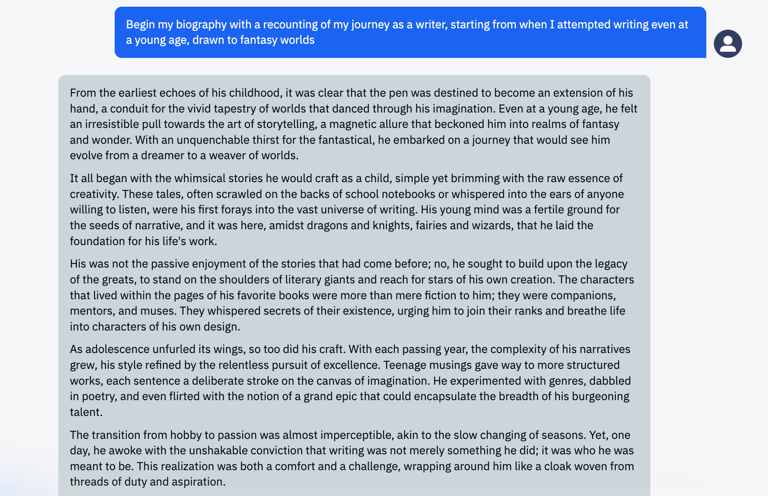
Exploring a character's background not only fleshes out their story but also helps you better understand your character's motives and actions in the present. The results will help you create characters with deep and distinct personalities.
Creating Dialogues
ChatGPT can also be used to create dialogues that reflect the individual traits of each character. This can be especially useful when you want to convey a character's unique way of speaking or personal views. Example prompts might include: "How would my character, who works in a science lab, explain a complex concept to another character?" or "How would my character react to an unexpected compliment?".
The response to the second question would be:
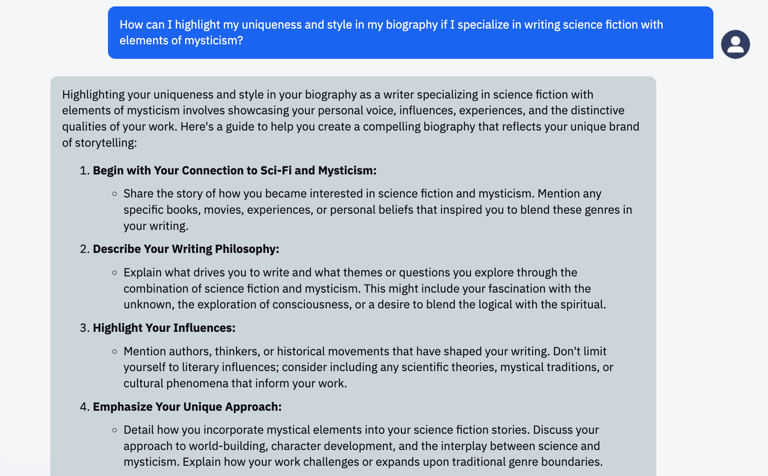
This approach will help you better understand your characters and give them greater depth and variety. Of course, the model's responses can only be a starting point—you will still need to decide which ideas and details to keep, and which to discard or modify so they better fit your vision of the character and the overall story.
World-Building with ChatGPT
World-building is one of the most important aspects of the creative process. A rich and vivid world where your story unfolds can not only captivate your reader but also add depth and complexity to your characters and their adventures.
Exploring and Creating World Geography:
The geography of a world plays a huge role in shaping its culture, history, and even conflicts. With ChatGPT, you can create unique descriptions of the terrain, geographical features, and climatic conditions of your world.
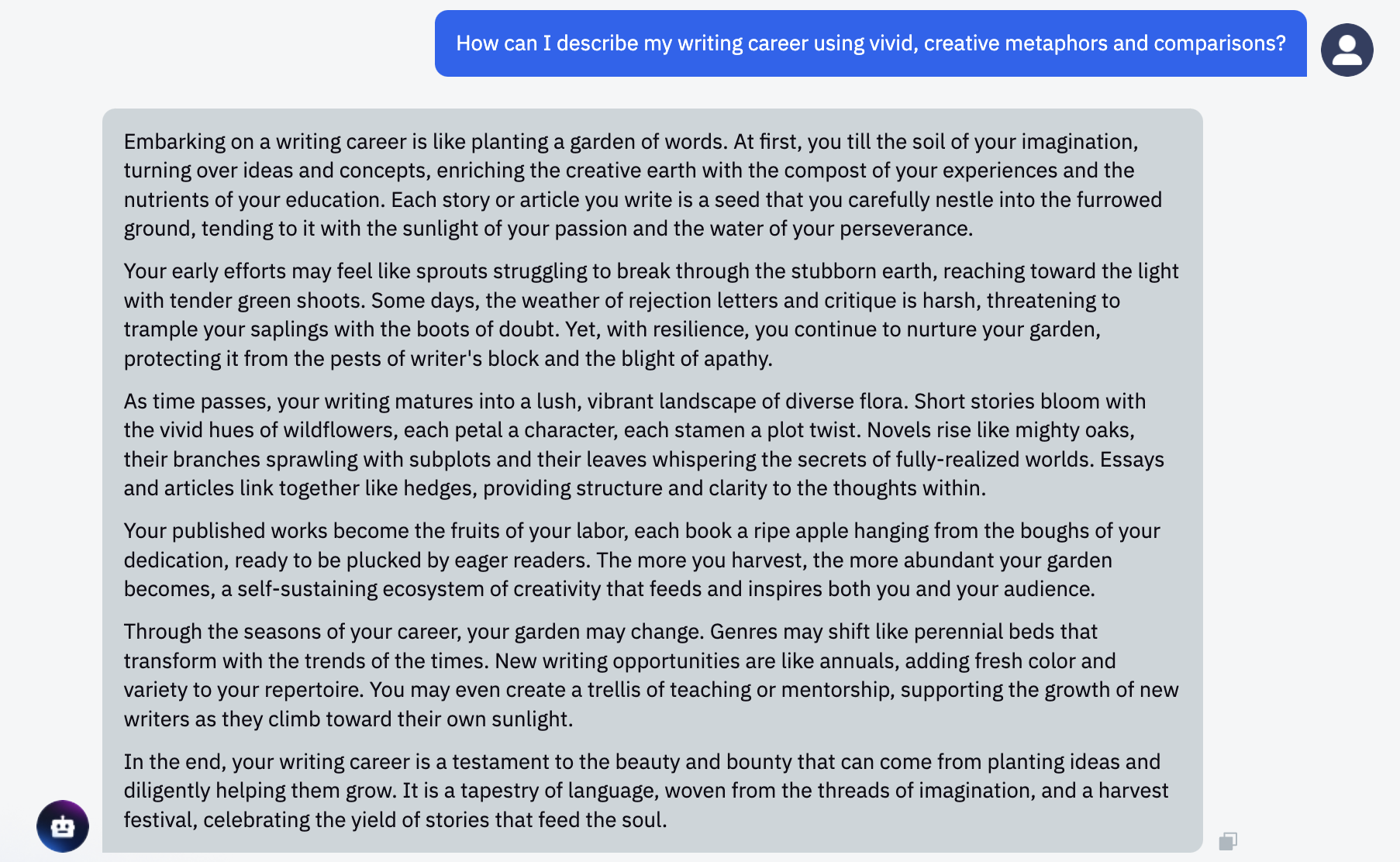
You can ask the model questions such as: "Describe the climatic and geographical conditions of a world that fit the plot, and describe how they affect the lives of the characters."
Response:
- Creating the History and Mythology of the World:
The history and mythology of your world give it depth and complexity, allowing readers to better understand its current state. With ChatGPT, you can create detailed chronicles, major events, legends, and myths.
You can ask questions such as: "Imagine what significant historical events have occurred in my world over the last hundred years?"
You have learned how to ask the right questions to develop character depth, create unique dialogues, and build complex worlds. Now, armed with this new knowledge, let's move on to practice!