Lesson 6: Maximize Your SMM Skills
Welcome to Lesson 6 of our course! Today, we will talk about SMM. Think about how much time it takes you to create interesting and engaging content for social media. This process involves not only creating and editing posts but also analyzing audience response, monitoring trends, answering followers' questions, and managing crisis situations. But what if you could automate a large part of this process and focus more time on strategy and creativity? In this lesson, we will look at how to use ChatGPT as your SMM assistant.
Developing a Content Strategy with ChatGPT
Before you start creating content, it is important to have a clear strategy. Your content strategy will determine what content you will create, for whom, and how it will help you achieve your goals.
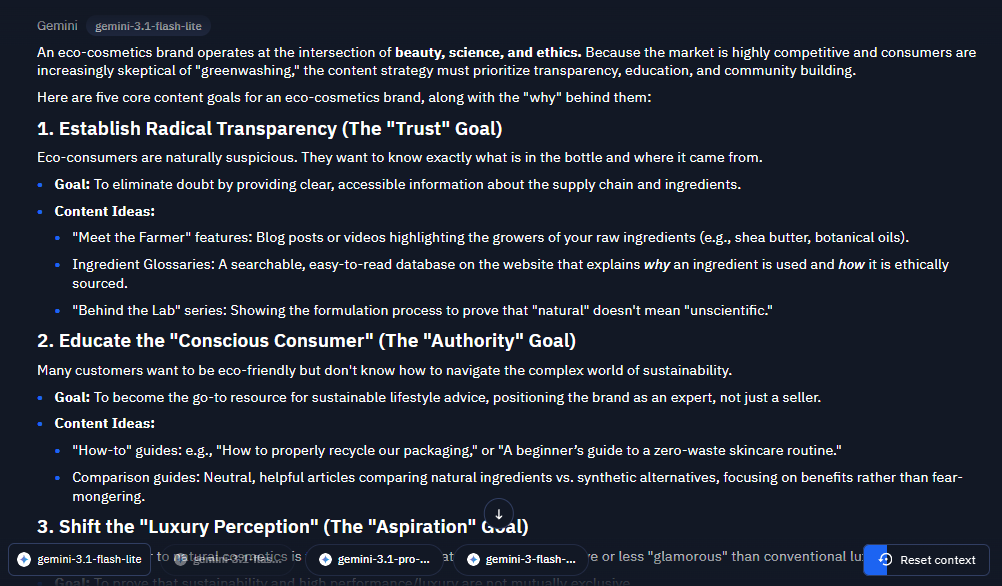
- Defining goals: The first step in developing a content strategy is defining your goals. What do you want to achieve with your content? This could be increasing brand awareness, attracting new followers, promoting a product or service, or building a community around your brand. You can ask ChatGPT: "What content goals might an eco-cosmetics brand have?".
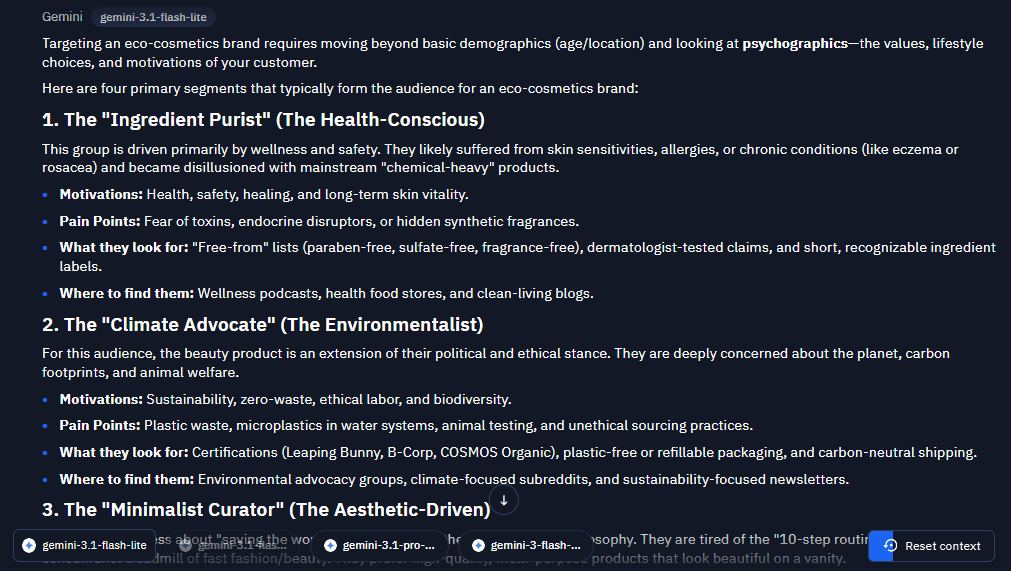
- Defining the audience: Your audience is the people you want to attract and engage with your content. They can be defined by various criteria, including age, gender, location, interests, and so on. With ChatGPT, you can define your target audience: "Who might be the target audience for an eco-cosmetics brand?".
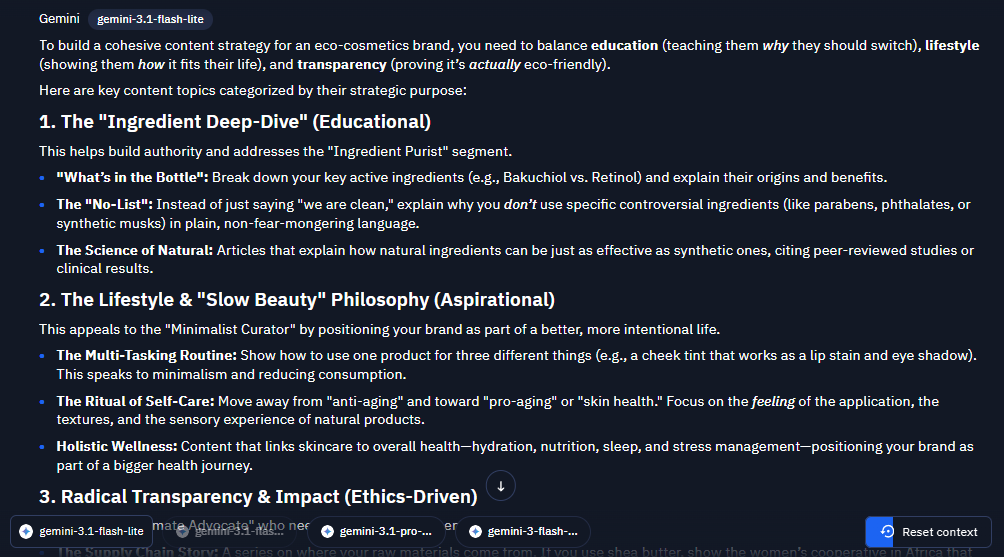
- Choosing key topics: Your key topics will determine what you will write about or create content for. They should reflect the interests of your audience and be related to your brand or product. Ask ChatGPT: "What could be the key topics for an eco-cosmetics brand?".
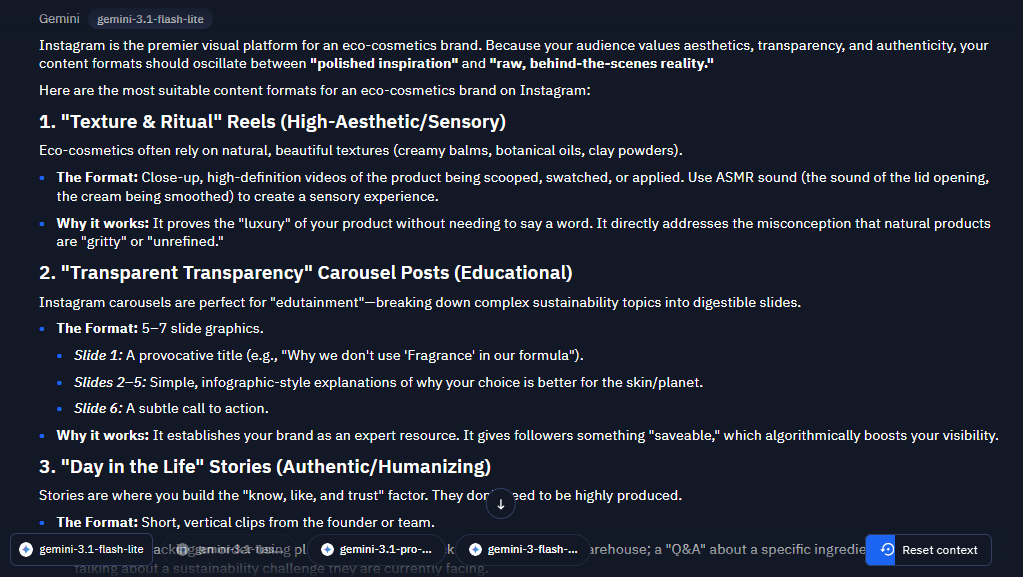
- Choosing content formats: There are many content formats on social media, including text posts, images, videos, stories, reels, etc. Your choice of format depends on your audience's preferences and which format is most suitable for conveying your message. Ask ChatGPT to suggest content formats: "What content formats would be suitable for an eco-cosmetics brand on Instagram?".
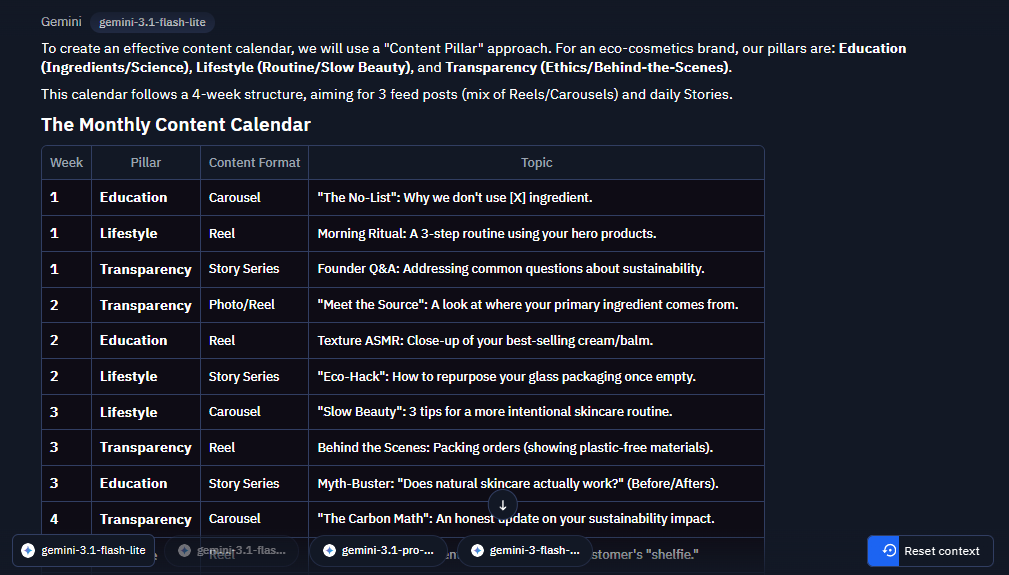
- Creating a content calendar: After defining your goals, audience, topics, and content formats, the next step is to create a content calendar. This is a schedule of when and what you will publish. With ChatGPT, you can create the foundation for a content calendar: "Help me create a content calendar for an eco-cosmetics brand for the next month".
Generating Post Ideas with ChatGPT
One of the most important parts of any content strategy is a constant stream of fresh and interesting post ideas. Here are a few ways ChatGPT can help with this:
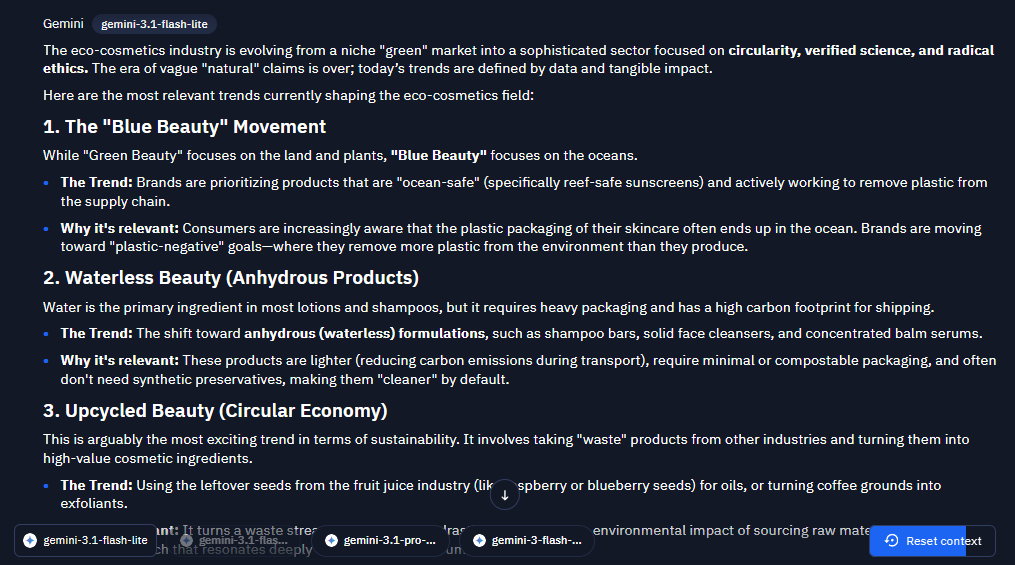
- Researching trends: To create relevant content, it is important to stay up to date with the latest trends in your field. You can ask ChatGPT to research trends related to your niche: "What trends are currently relevant in the field of eco-cosmetics?".
-
Brainstorming ideas: If you run out of ideas, ChatGPT can help you brainstorm. Just ask it to suggest a few ideas.
-
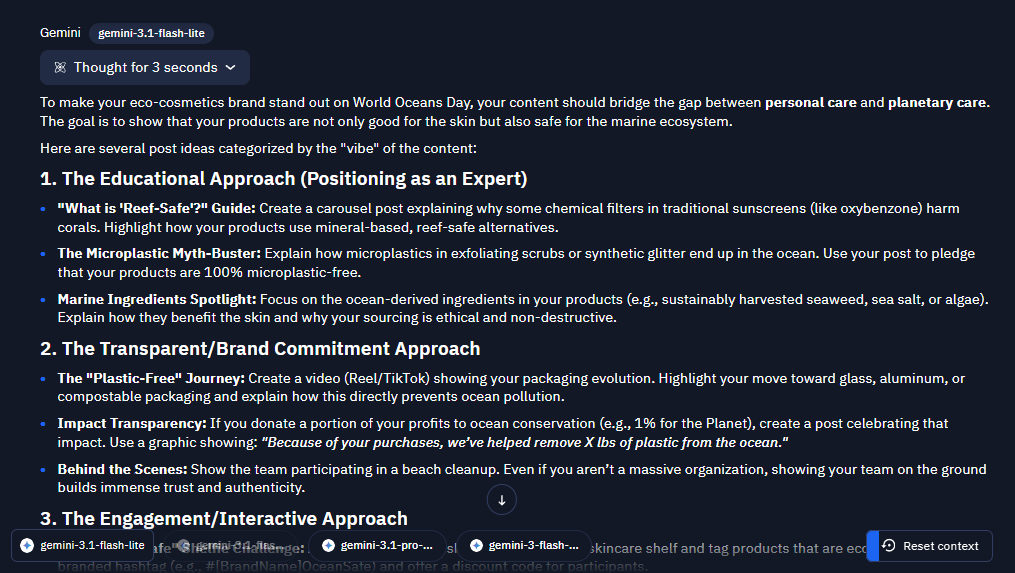
Creating ideas based on thematic days or events: Your content can be tied to specific dates or events, such as international days, holidays, or seasonal events. Ask ChatGPT for post ideas based on upcoming events: "Come up with post ideas for World Oceans Day for an eco-cosmetics brand":
-
Adapting ideas for different formats: The same idea can be presented in different formats, for example, as a blog post, video, infographic, or podcast. Ask ChatGPT to adapt an idea for different formats and choose the one you like.
-
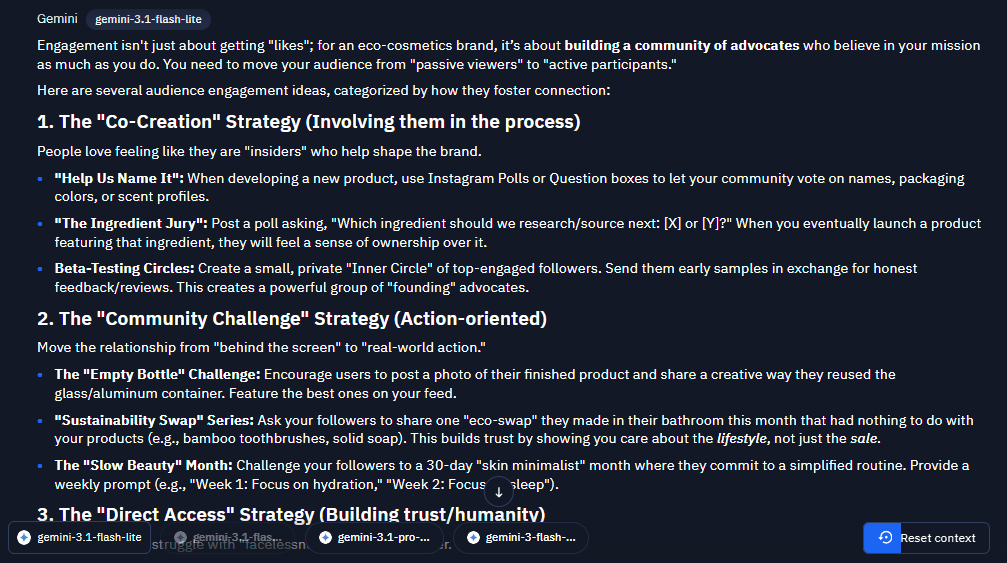
Creating ideas for audience engagement: Audience engagement is a key factor for success on social media. This can take the form of quizzes, polls, contests, or challenges. ChatGPT can help generate such ideas: "Suggest audience engagement ideas for an eco-cosmetics brand"
Regularly using these approaches will help retain your audience's attention and ensure a steady stream of fresh content.
Community Building with ChatGPT
Social networks are not just platforms for publishing content; they also provide opportunities to develop and strengthen communities. A truly effective SMM strategy focuses heavily on this aspect. ChatGPT can be a powerful tool for developing your online community.
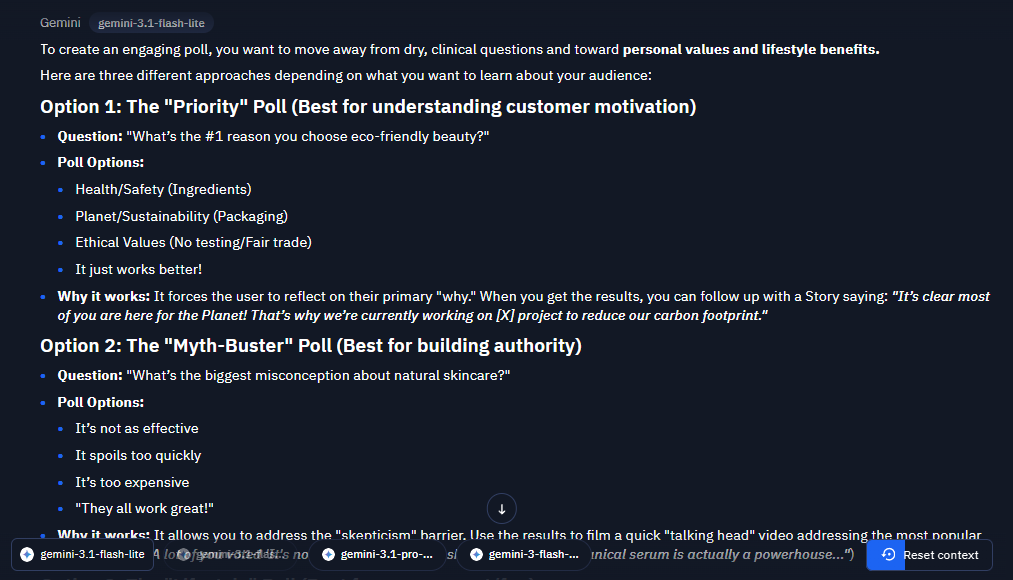
First, you can use ChatGPT to develop multifaceted engagement strategies. For example, generating interesting questions or polls that can spark discussion and engage your audience in a dialogue. "Create an interesting poll about the benefits of using eco-cosmetics":
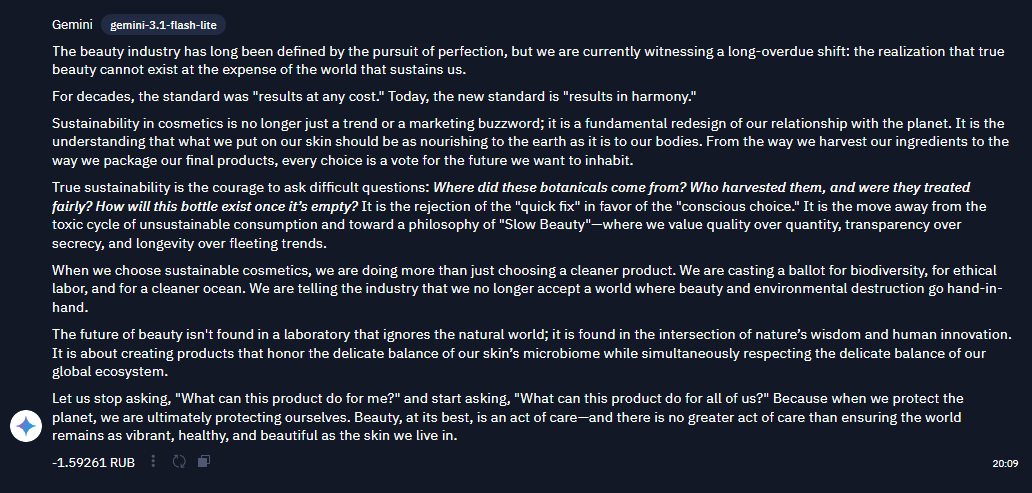
Second, you can use ChatGPT to create message texts that will help establish a deeper and more personal interaction with your audience. Messages that demonstrate your brand's values or highlight your mission can strongly reinforce the connection with your community. For example, "Write an inspiring message about the importance of sustainability in the cosmetics industry":
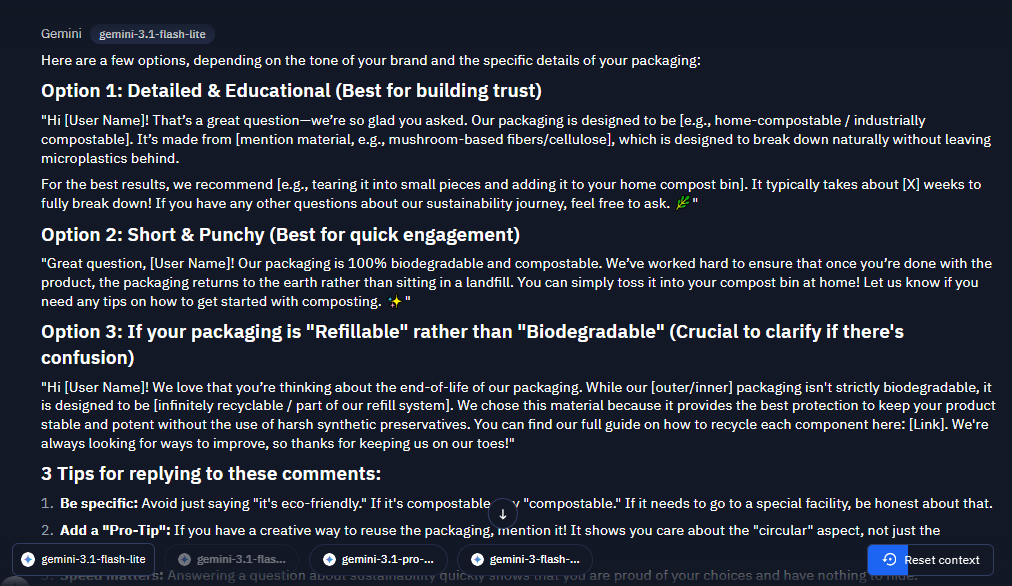
It is also important to note that community management involves monitoring and responding to comments under your posts. Although ChatGPT cannot interact directly with users, it can help you prepare responses to typical comments or questions. Just present the situation and ask for help: "Write a reply to a user's comment asking about the biodegradable packaging of our products".
Crisis Management with ChatGPT
Crises on social media can develop and escalate quickly, and responding to them effectively can be a critical element of your social media strategy. Under these conditions, ChatGPT can become a valuable tool. At every stage of crisis resolution, it can bring you a lot of value if you formulate your prompt correctly.
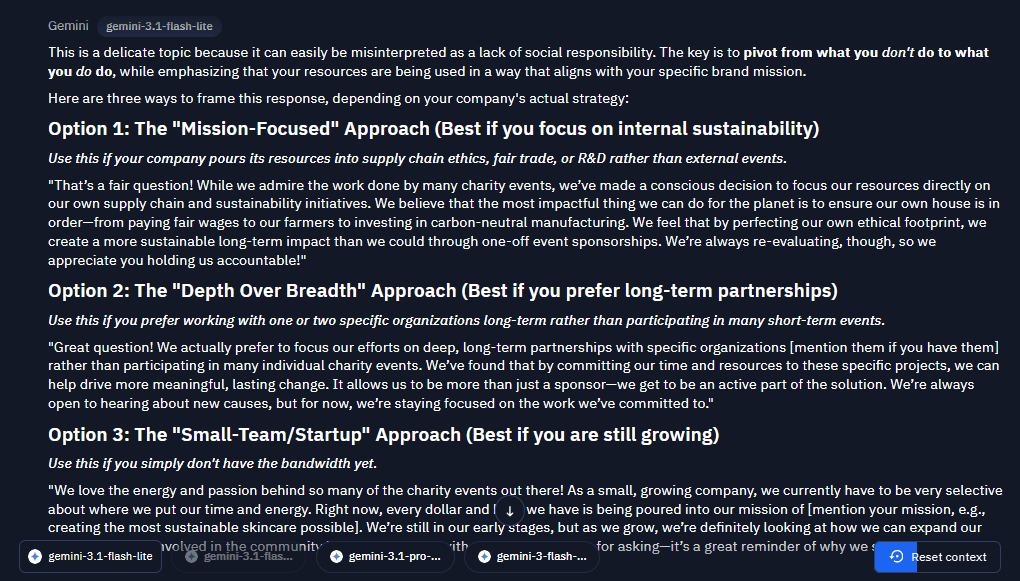
- ChatGPT can help you prepare for potential crises by creating sample responses to various difficult questions or comments. This will help you think in advance about appropriate response strategies and act more confidently in a real situation. For example, "Formulate a response to a possible question about why our company does not participate in charity events":
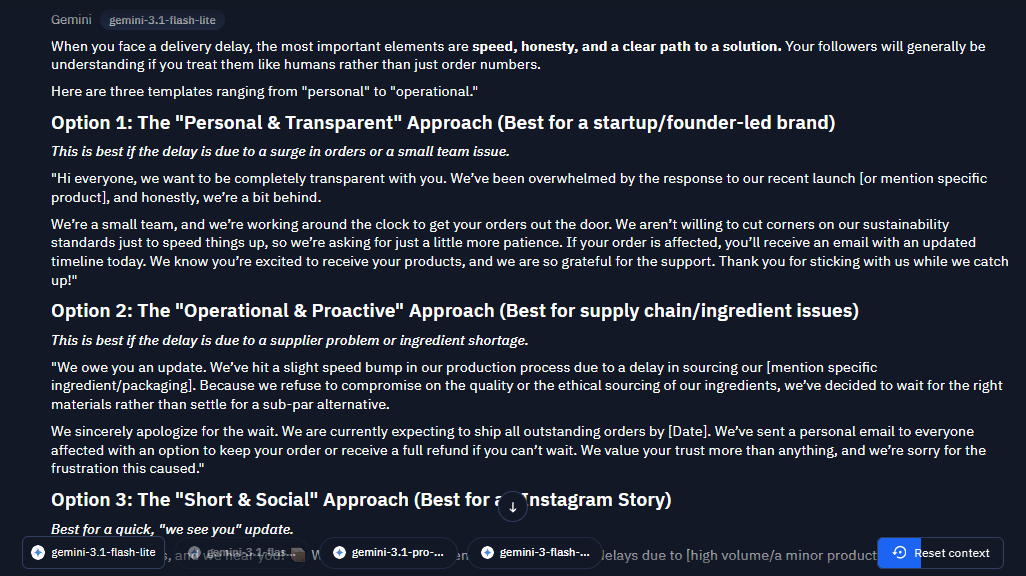
- During a crisis, when a quick and accurate response is required, ChatGPT can help formulate clear and constructive messages. Whether it's explaining a complex issue, apologizing, or informing about next steps, ChatGPT can be useful. "Formulate an apology and explanation for our followers regarding the reasons for the delay in product delivery":
- After a crisis, ChatGPT can assist you in analyzing what happened, helping to identify key communication points and possible ways to improve. "Formulate a report on communication with followers during the delivery delay crisis":
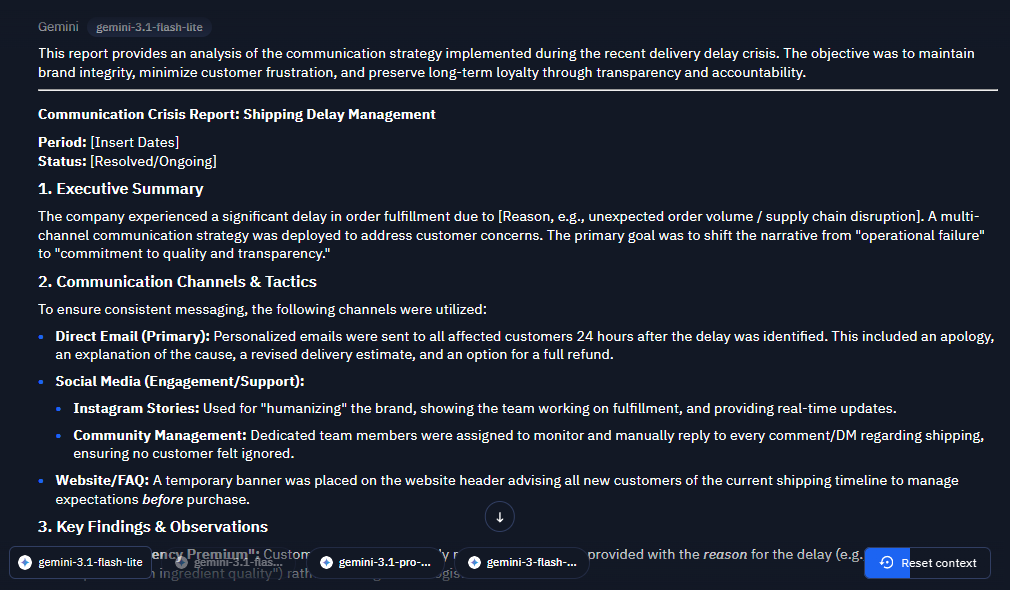
All these aspects make ChatGPT a valuable tool for preparing for, responding to, and analyzing crisis situations on social media. Thanks to this, you will be able to effectively manage potential crises, minimize damage to your brand, and maintain your audience's trust.
Analyzing Results
Understanding the results of your SMM efforts is a key element of any strategy. ChatGPT can help you in this process by providing an analytical approach to studying feedback and data trends.
First, you can use ChatGPT to analyze feedback from followers. For example, you can ask it to conduct a content analysis of comments and messages to gain a deeper understanding of how your audience reacts to different types of content: "Analyze the general theme and sentiment of the comments under our latest post".
Second, ChatGPT can help you interpret social media analytics data. You can ask it to formulate hypotheses about the reasons for changes in metrics, such as engagement rate, number of likes and views, or even the number of new followers: "Suggest possible reasons for the growth in engagement in our group over the last month".
You can also use ChatGPT to evaluate and compare the effectiveness of different content strategies. With its analytical capabilities, you can better understand which types of content and communication strategies are most effective.
And now, let's practice!
Practical Assignment
Task: Create a content strategy for a fictional brand for the next month using ChatGPT.
Instructions:
- First, define the parameters of your fictional brand. This can be any product or service you represent.
- Ask ChatGPT questions about what topics, styles, and content formats might be suitable for your brand.
- Ask ChatGPT to generate post ideas based on these topics.
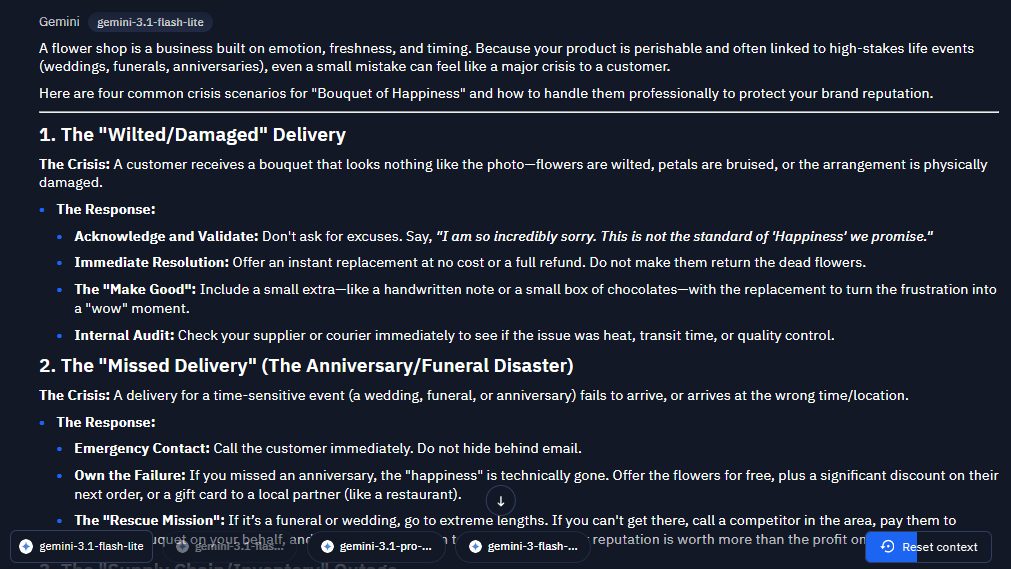
- Think about possible crisis scenarios that could arise in your industry, and ask ChatGPT to help you formulate responses to these scenarios.
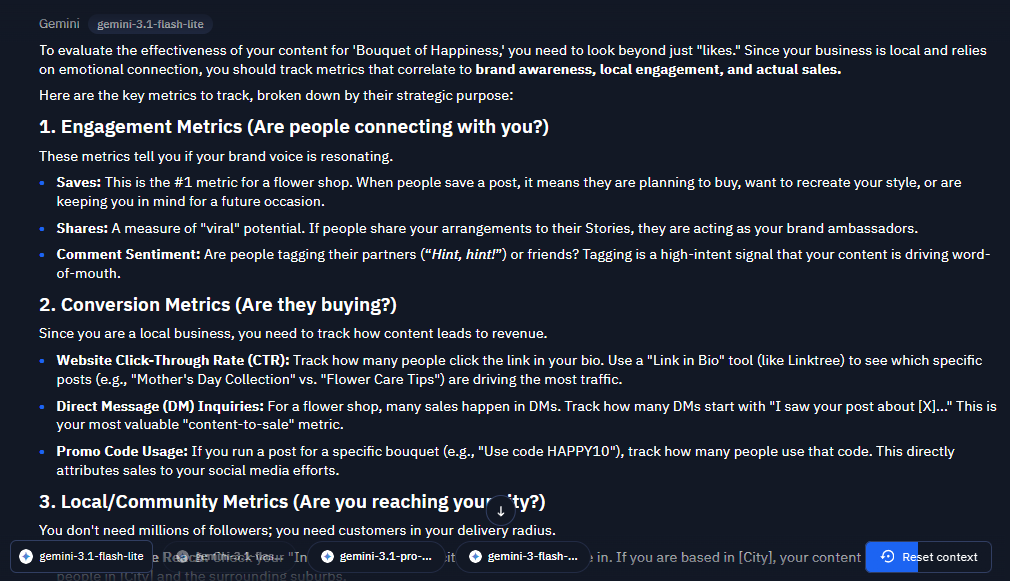
- Ask ChatGPT to give you a general idea of what metrics and indicators you should track to evaluate the effectiveness of your content.
Example:
Brand: Flower shop "Bouquet of Happiness"
- "Create a content strategy for the flower shop 'Bouquet of Happiness'"
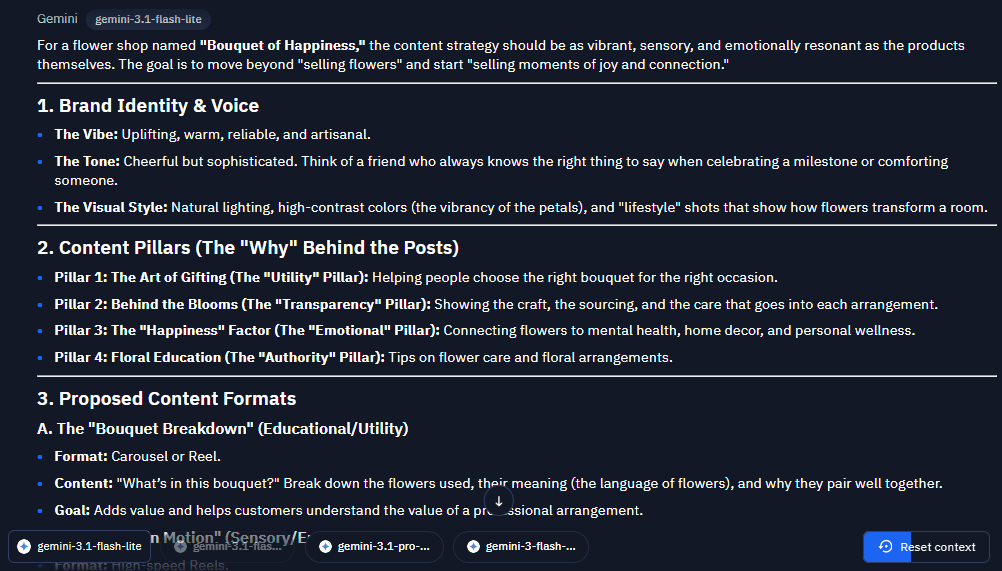
- "Give me post ideas for the flower shop 'Bouquet of Happiness'"
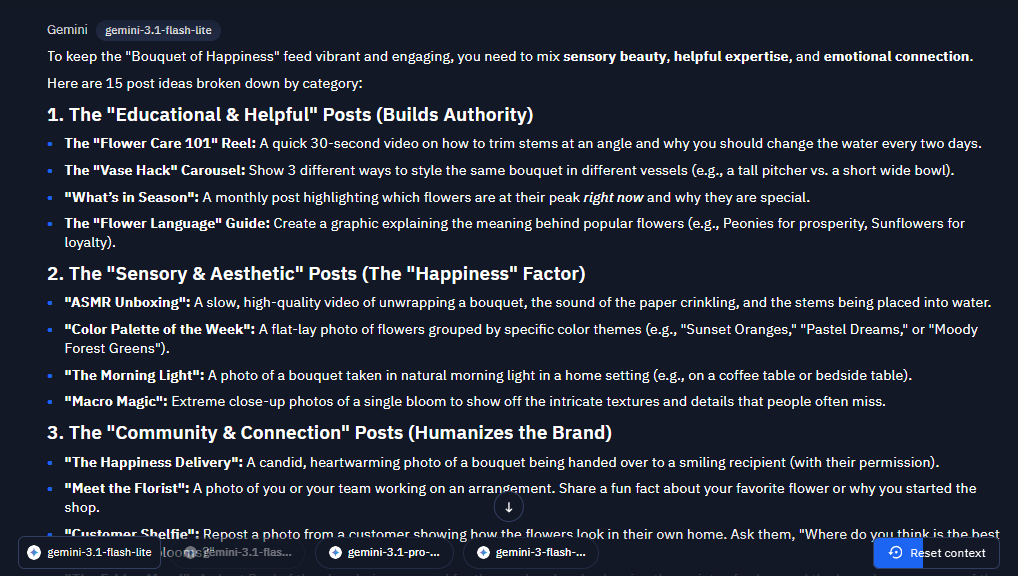
- "What crisis scenarios might arise for the flower shop 'Bouquet of Happiness' and how should we respond to them?"
- "What metrics should I track to evaluate the content effectiveness of the flower shop 'Bouquet of Happiness'?"
Conclusion
We have covered many ways to use ChatGPT in the field of SMM, ranging from creating a content strategy to managing crisis situations. Using such an AI assistant can significantly facilitate and speed up your SMM workflow, freeing up your time for deeper strategic planning and creativity. Remember that AI does not replace human contact and intuition, but it can become a powerful tool in your hands. Try applying these methods in practice, and you will see how ChatGPT can improve your social media workflow.